Sciatica vs. Low Back Pain: What's the Difference?
How to tell nerve pain from muscle pain, and why it changes how you treat it
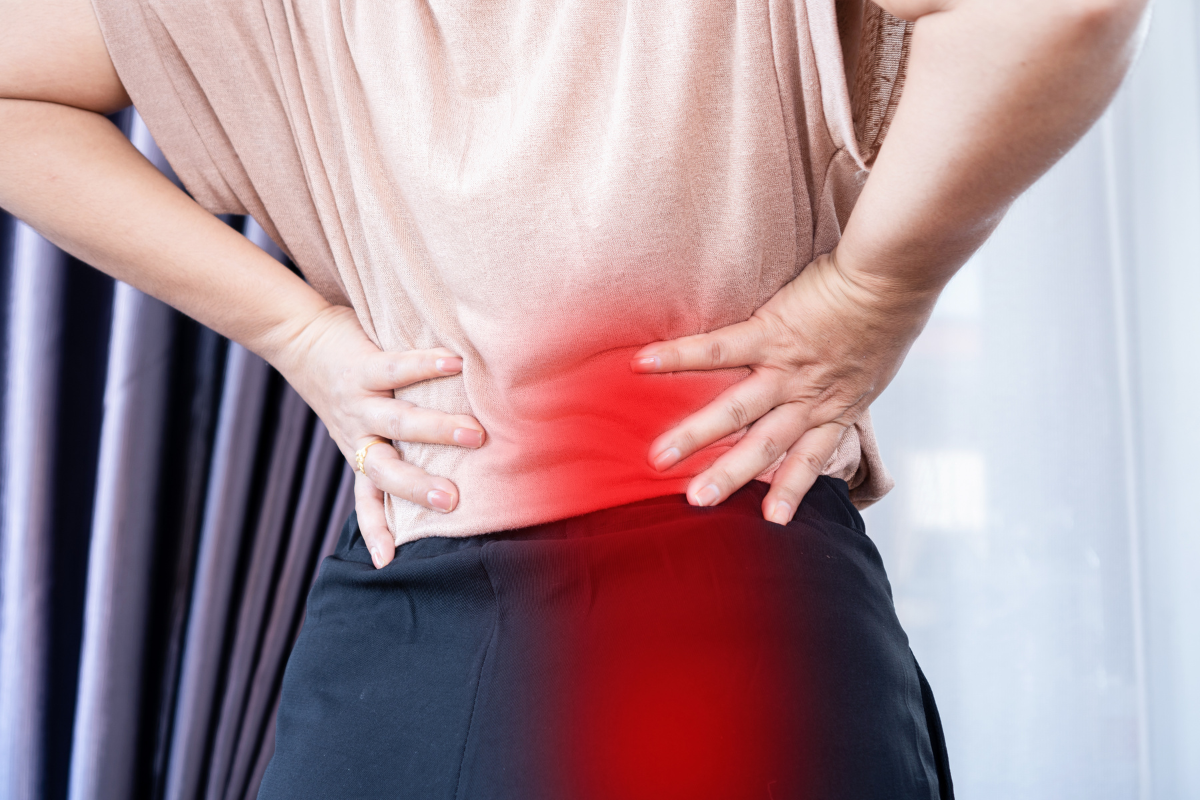
Back pain is one of the most searched health complaints in the country, and for good reason: research cited by Mayo Clinic Health System suggests roughly 80% of U.S. adults will experience low back pain at some point. But not all back pain is the same, and one of the most important distinctions is whether you're dealing with ordinary low back pain or true sciatica. Getting that wrong can send you down the wrong treatment path for weeks.
What is sciatica?
Sciatica isn't a diagnosis on its own, it's a description of symptoms caused by irritation or compression of the sciatic nerve, the largest nerve in the body. As Mayo Clinic describes it, sciatica is a sharp, shooting pain that travels from the low back down the back or side of one leg, and it typically affects only one side of the body.
The key word is
travels. Ordinary mechanical low back pain tends to stay put, an ache, stiffness, or soreness localized to the lower back or hips. Sciatica radiates, following the path of the nerve down into the buttock, thigh, and sometimes all the way to the foot.
Symptoms of nerve-related pain
When a nerve root is involved, the symptoms tend to look different from muscle pain. According to Mayo Clinic Health System, nerve compression commonly produces three things: pain, numbness, and weakness, though not everyone gets all three.
Signs your pain is nerve-related rather than purely muscular:
Pain that shoots, burns, or feels like an electric shock down one leg- Numbness, tingling, or a "pins and needles" feeling along the leg or foot
- Symptoms that worsen with coughing, sneezing, or prolonged sitting
- Weakness in the leg or foot
Mechanical low back pain, by contrast, more often feels like a dull ache or stiffness, may flare with certain movements or lifting, and tends to ease with position changes.
Common causes
Sciatica usually traces back to something pressing on the nerve where it exits the spine. Mayo Clinic notes that it most commonly occurs when a herniated disc, bone spur, or spinal stenosis compresses part of the nerve. Other contributors include degenerative changes in the discs and, in some cases, tightness in the deep hip muscles.
Ordinary low back pain has its own common drivers, muscle and ligament strains from lifting or sudden movements, and age-related changes like osteoarthritis and disc degeneration. Both can be painful. The difference is
what tissue is generating the pain, and that determines what actually helps.
Why stretching alone often doesn't fix it
This is the part that frustrates people most. You feel tightness down the back of your leg, so you stretch your hamstring, and you get short-term relief that never sticks. The reason is that if a nerve is being compressed or irritated at the spine, stretching the leg doesn't address the source, and aggressive stretching can sometimes aggravate an irritated nerve.
The same logic applies to generic low back stretches for mechanical pain. They might feel good in the moment, but they don't build the strength, control, and movement capacity that prevent the pain from coming back.
When to seek professional help
The encouraging news is that most cases of sciatica improve with conservative care and time, Mayo Clinic notes that many resolve within a few weeks. But you shouldn't wait it out indefinitely, and some symptoms warrant prompt medical attention.
Mayo Clinic Health System advises seeking care if your pain is severe or progressively worsening, follows a significant injury like a fall or car accident, or, importantly, if you experience
loss of leg strength or new bowel or bladder control problems, which require urgent evaluation.
Short of those red flags, a physical therapist can perform the testing needed to determine whether your pain is nerve-related or mechanical, and build a plan that targets the real source. In Florida, you can see a physical therapist directly without a physician referral, so there's no reason to spend weeks guessing.
Find out what's actually causing your pain
Whether it's true sciatica or mechanical low back pain, the fix starts with an accurate diagnosis. Schedule an evaluation with Movement Driven to determine the true source of your pain, and a clear plan to resolve it, serving Jacksonville and St. Johns County.
This article is for general education. If you experience leg weakness, numbness in the groin area, or loss of bladder or bowel control, seek medical care right away.