
Still in Pain After Physical Therapy? Here's Why Root-Cause Movement Care Is Different
Greg Goldberger • April 20, 2026
If PT hasn't gotten you better, the problem usually isn't you — it's the model

You Did Everything Right. So Why Aren't You Better?
You went to PT. You showed up consistently, did your exercises, and followed the plan. And yet — here you are. Maybe you made some progress and then hit a wall. Maybe you felt fine during treatment but the pain came back as soon as you returned to your sport or your normal life. Maybe you were discharged with a home program that hasn't helped, and you're quietly wondering whether this is just something you have to live with.
It's not. And the fact that traditional PT hasn't fixed it doesn't mean you're broken or that recovery isn't possible. It usually means something important was missed — and that's exactly what root-cause movement care is designed to find.
Why Conventional PT Often Falls Short
Traditional physical therapy, especially within the insurance-based system, is largely structured around diagnosing and treating a specific site of injury. You have shoulder pain — so you do shoulder exercises. You have knee pain — so you strengthen your quad. This approach can be helpful for straightforward, isolated injuries, but it breaks down quickly for anything more complex.
The human body doesn't work in isolated parts. Pain in your knee might be coming from how your hip moves. Shoulder dysfunction might trace back to how your thoracic spine rotates. Low back pain that won't quit is often a reflection of restricted mobility elsewhere in the chain that's causing your lumbar spine to absorb forces it wasn't designed to handle repeatedly.
When treatment is limited to the painful area, these connections get missed entirely. You improve locally, but the underlying driver of the problem remains untouched — and eventually, the symptoms come back.
What Root-Cause Assessment Actually Looks Like
At Movement Driven, we start every patient relationship the same way: with a comprehensive movement assessment that looks at your entire body, not just where it hurts. We evaluate how you move through fundamental patterns — how you hinge, squat, rotate, push, pull, and stabilize. We look at mobility restrictions, asymmetries, compensation patterns, and how your nervous system is loading and controlling movement under different demands.
From that assessment, we build a clear picture of not just what is painful, but why — and what needs to change for the pain to actually go away and stay gone. This is a fundamentally different starting point than most clinical settings offer, and it's why our patients often see progress within their first few sessions after being stuck for months or years elsewhere.
Common Things We Find That Were Missed
Every patient is different, but in our Jacksonville and St. Johns practice, a few patterns come up consistently in patients who've been through traditional PT without resolution.
Mobility deficits upstream from the pain site — a stiff ankle driving knee pain, a restricted hip contributing to low back issues. Weakness or timing problems in stabilizing muscles that don't show up in standard strengthening protocols. Fascial tension and trigger points that are referring pain to a distant area, making it look like an injury in a place that's actually a symptom. Movement compensations that developed during a previous injury and were never fully corrected, now creating new stress patterns.
When we find these things, we address them directly. That may include manual therapy, dry needling, targeted corrective exercise, and movement re-education — all integrated into a cohesive plan rather than isolated treatments.
This Isn't About Criticizing Your Previous PT
We want to be clear: many physical therapists are excellent clinicians doing their best within a system that limits their time and their ability to deliver comprehensive care. The issue is rarely the therapist's skill — it's the structure they're working within and the model of care that structure produces.
Our goal isn't to criticize what came before. It's to offer you something genuinely different: an unhurried, one-on-one process that prioritizes understanding your body fully before deciding how to treat it. If you've already done PT and didn't get the results you needed, that history is actually valuable — it tells us a lot about what to look for.
You Deserve Answers, Not Just Appointments
If you're in Jacksonville, Ponte Vedra, or St. Johns County and you've been going in circles with your pain, we'd like to sit down with you and talk through what we're seeing and what a different approach might look like for you. There's no obligation — just a real conversation with a clinician who has time to listen.
Book a discovery call
— let's figure out what's actually going on

Training for a fall race? Learn five running injury warning signs and how Movement Driven helps runners in Jacksonville and St. Johns, FL.
Dr. Greg and Tyler Martin discuss personalized fitness, nutrition, recovery, physical therapy, and golf performance in Jacksonville and St. Johns, FL.
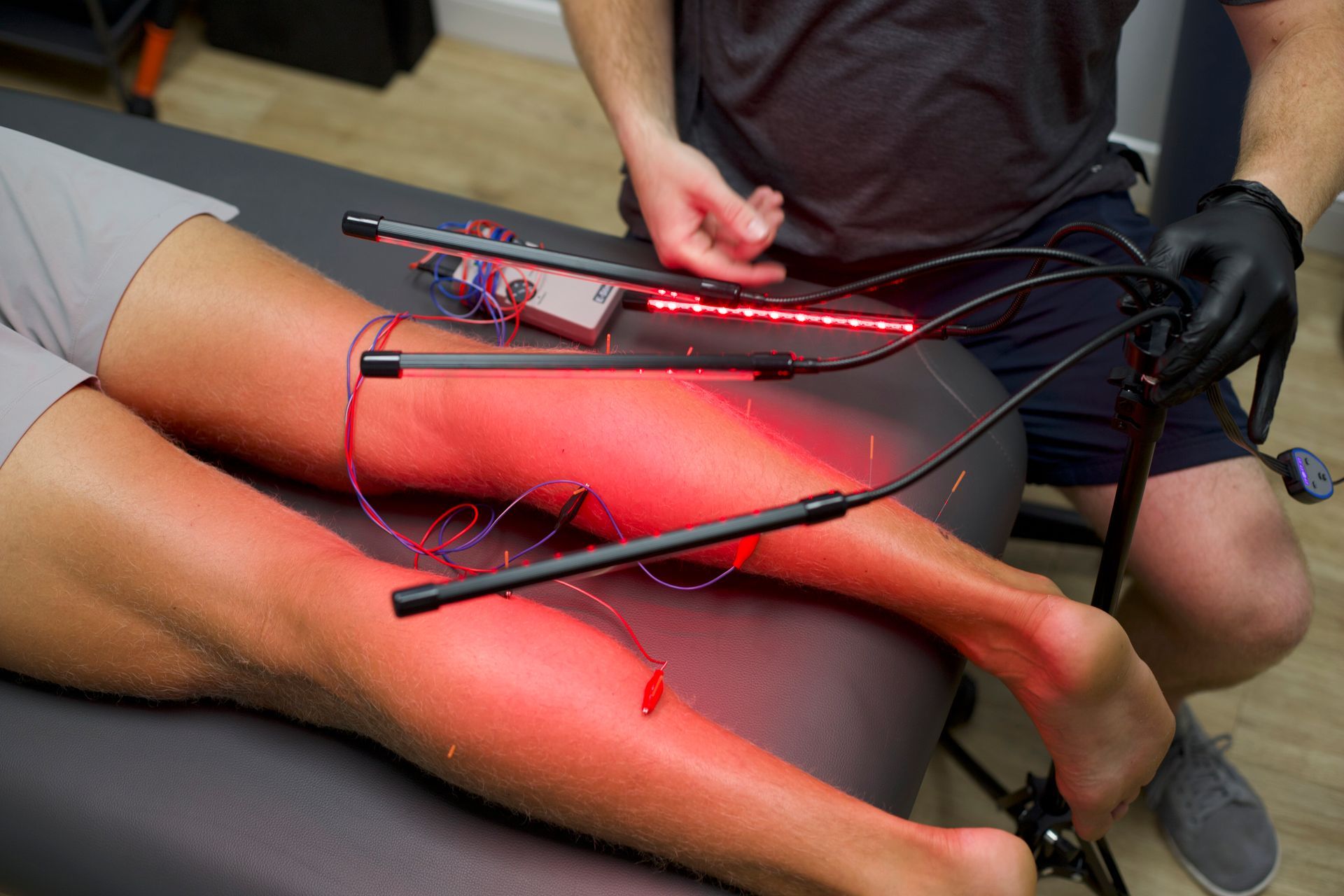
Compare dry needling and massage for muscle tightness and pain. Explore individualized care at Movement Driven in Jacksonville and St. Johns, FL.
Learn how to return to golf after injury with Dr. Greg’s tips on pain, mobility, strength, TPI assessments, and rebuilding your swing safely.
Not sure if it's normal soreness or something more? Movement Driven breaks down the signs that mean it's time to see a physical therapist.

Learn what the research actually says about safely increasing weekly mileage — and where the 10% rule falls short.

Movement Driven answers a common question from Jacksonville and St. Johns County parents. Here's what it actually checks for.
Learn the difference between tennis elbow and golfer’s elbow, common causes of elbow pain, and why treating the source matters with Dr. Greg Goldberger.

See the warm-up routine Movement Driven recommends to Jacksonville and St. Johns County golfers heading into fall golf season.
Does a rotator cuff tear mean surgery? Dr. Greg explains MRI findings, red flags, partial vs. full tears, and when physical therapy may help.