
What I Tell Every Golfer, Pickleball Player, and Runner About Eating for Recovery (And Why Most Get It Wrong)
Greg Goldberger • March 3, 2026
Most active adults are working hard and eating 'healthy' — but still under-recovering. Here's what the research actually says about nutrition for athletes over 40.
If there is one conversation I have with nearly every patient who walks through my door — the golfer managing a nagging shoulder, the runner frustrated by recurring hamstring pulls, the pickleball player whose knees hurt more than they should — it is this:
You are working too hard in the gym and not nearly hard enough in the kitchen.
That is not a criticism. It is one of the most common blind spots I see in active adults here in St. Johns County and Jacksonville. People who are genuinely committed to their health. People who show up, put in the work, and then wonder why their body is not responding the way it used to.
The answer, more often than not, comes down to recovery nutrition — and it is almost always being underestimated.
The Myth of 'Eating Healthy'
When I ask patients how their nutrition is, the answer is almost always some version of 'pretty good.' Clean eating. Not too much junk. Watching the carbs.
Here is the problem: eating healthy for general wellness and eating to support tissue recovery, performance, and longevity are not the same thing. Not even close.
For active adults — especially those over 40 — the two biggest nutritional gaps I consistently see are:
- Not enough protein — and not eating it at the right times
- Chronic under-fueling relative to actual activity output
Both of these issues directly slow down your recovery, increase your injury risk, and accelerate the muscle loss that becomes a real problem as we age.
The Protein Problem
The current research on protein needs for active adults is much more aggressive than what most people are following. We are talking about 0.7 to 1.0 grams of protein per pound of body weight for people who are exercising regularly and want to maintain muscle tissue.
For a 180-pound golfer or recreational runner, that is 126 to 180 grams of protein per day. Most people I work with are getting half that.
What does under-consuming protein actually do? It means your body cannot fully repair the micro-damage that happens during every workout, every round of golf, every pickleball match. Over time, that incomplete recovery compounds. Joints feel stiffer. Muscles take longer to bounce back. What should be soreness starts feeling more like injury.
Timing Matters More Than You Think
It is not just how much protein — it is when. Your muscles are most receptive to protein synthesis in the 30 to 60 minutes following exercise. If you finish your round of golf, drive home, and eat a large meal three hours later, you have missed the window where your body was most ready to rebuild.
A practical fix:
keep something with you. A protein shake in the golf bag. Greek yogurt in the cooler. Something with at least 20 to 30 grams of quality protein that you can get in within an hour of finishing activity.
The Under-Fueling Trap
This one catches a lot of active adults, especially those who are weight-conscious. They are working out hard, watching portions, cutting calories — and then wondering why they feel sluggish, why their joints ache, and why they are not making progress.
When you chronically under-fuel, your body does not have enough energy to support both performance and recovery. Something gets sacrificed. And in my experience, the first thing to go is the healing process.
I am not a registered dietitian, and I always recommend working with one if you want a fully personalized nutrition plan. But in my clinical experience, the active adults who take recovery nutrition seriously — who treat food as part of their training — are the ones who stay out of my office and on the course, the trail, and the court.
One Practical Starting Point
If you are not sure where to start, try this for the next two weeks: prioritize 25 to 30 grams of protein at every meal, and have a protein-rich snack within an hour of any workout or physical activity. Track it loosely for a week and see where your gaps are.
It is a small change, but for a lot of my patients, it is the missing piece that unlocks faster recovery, less pain, and more energy to do the things they love.
Need more inspiration for your recovery with nutrition? Download our FREE guide: The Ultimate Nutrition Guide for Orthopedic Injury Recovery
And if you are dealing with pain or movement limitations that are keeping you from being as active as you want to be, that is exactly what we work on at Movement Driven. Recovery and performance are not just about what happens in the gym. They are about how you support your body the other 23 hours of the day.
➤ Ready to move better and recover faster? Schedule your free 15-minute discovery call
with Dr. Greg today.
Training for a fall race? Learn five running injury warning signs and how Movement Driven helps runners in Jacksonville and St. Johns, FL.
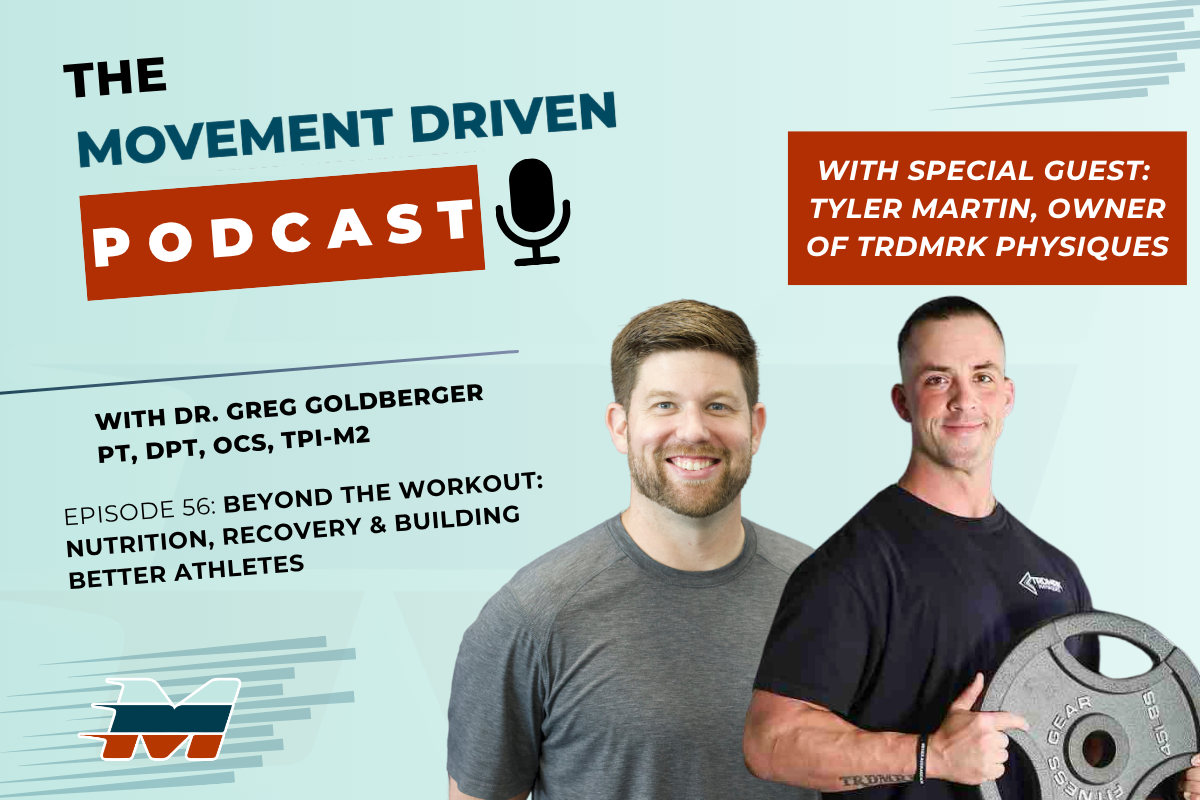
Dr. Greg and Tyler Martin discuss personalized fitness, nutrition, recovery, physical therapy, and golf performance in Jacksonville and St. Johns, FL.
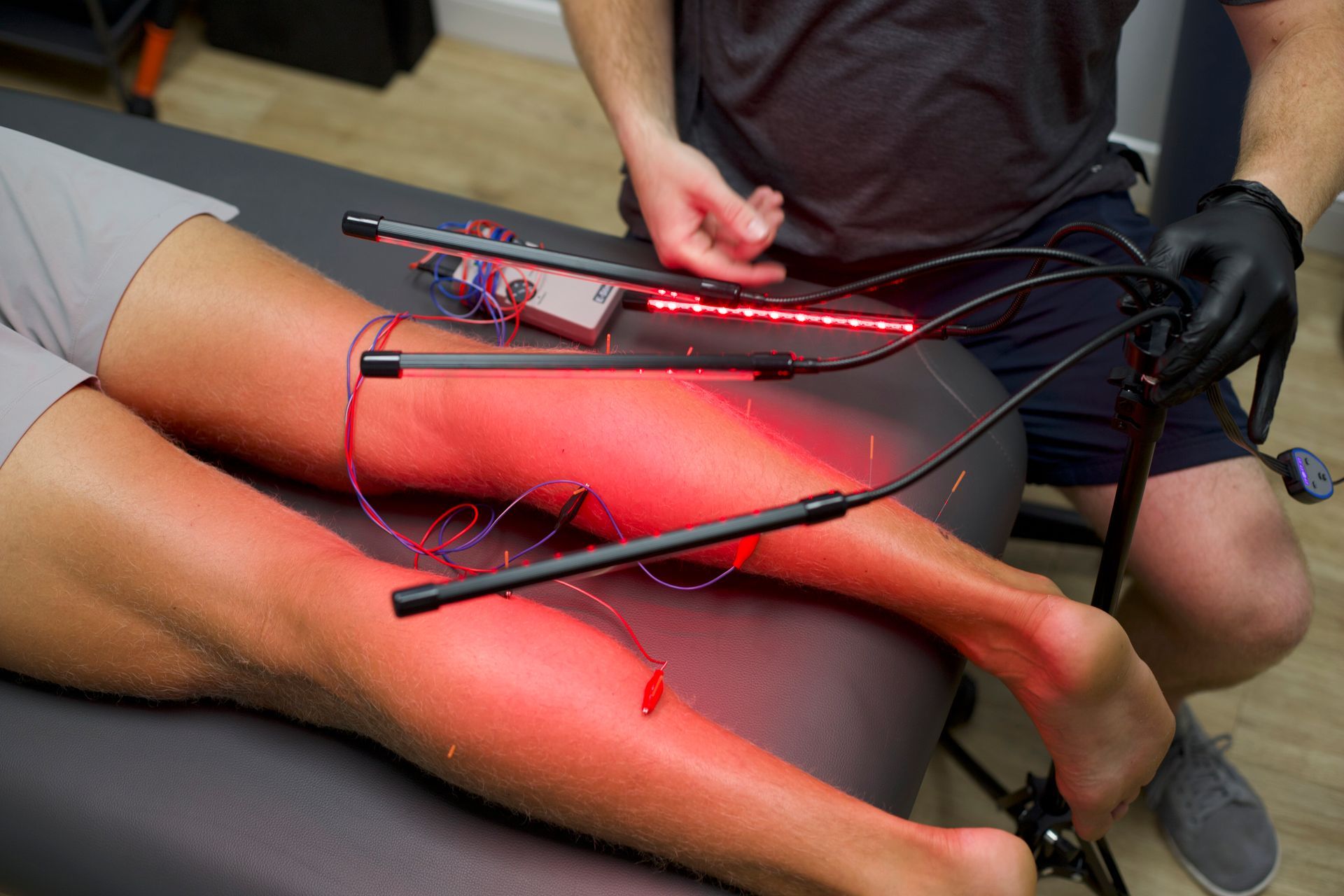
Compare dry needling and massage for muscle tightness and pain. Explore individualized care at Movement Driven in Jacksonville and St. Johns, FL.
Learn how to return to golf after injury with Dr. Greg’s tips on pain, mobility, strength, TPI assessments, and rebuilding your swing safely.
Not sure if it's normal soreness or something more? Movement Driven breaks down the signs that mean it's time to see a physical therapist.

Learn what the research actually says about safely increasing weekly mileage — and where the 10% rule falls short.

Movement Driven answers a common question from Jacksonville and St. Johns County parents. Here's what it actually checks for.
Learn the difference between tennis elbow and golfer’s elbow, common causes of elbow pain, and why treating the source matters with Dr. Greg Goldberger.
See the warm-up routine Movement Driven recommends to Jacksonville and St. Johns County golfers heading into fall golf season.
Does a rotator cuff tear mean surgery? Dr. Greg explains MRI findings, red flags, partial vs. full tears, and when physical therapy may help.