Why Your Pain Keeps Coming Back (And What You're Actually Missing)
Why movement quality, root-cause thinking, and brain-muscle connection are the missing pieces in most people's recovery.
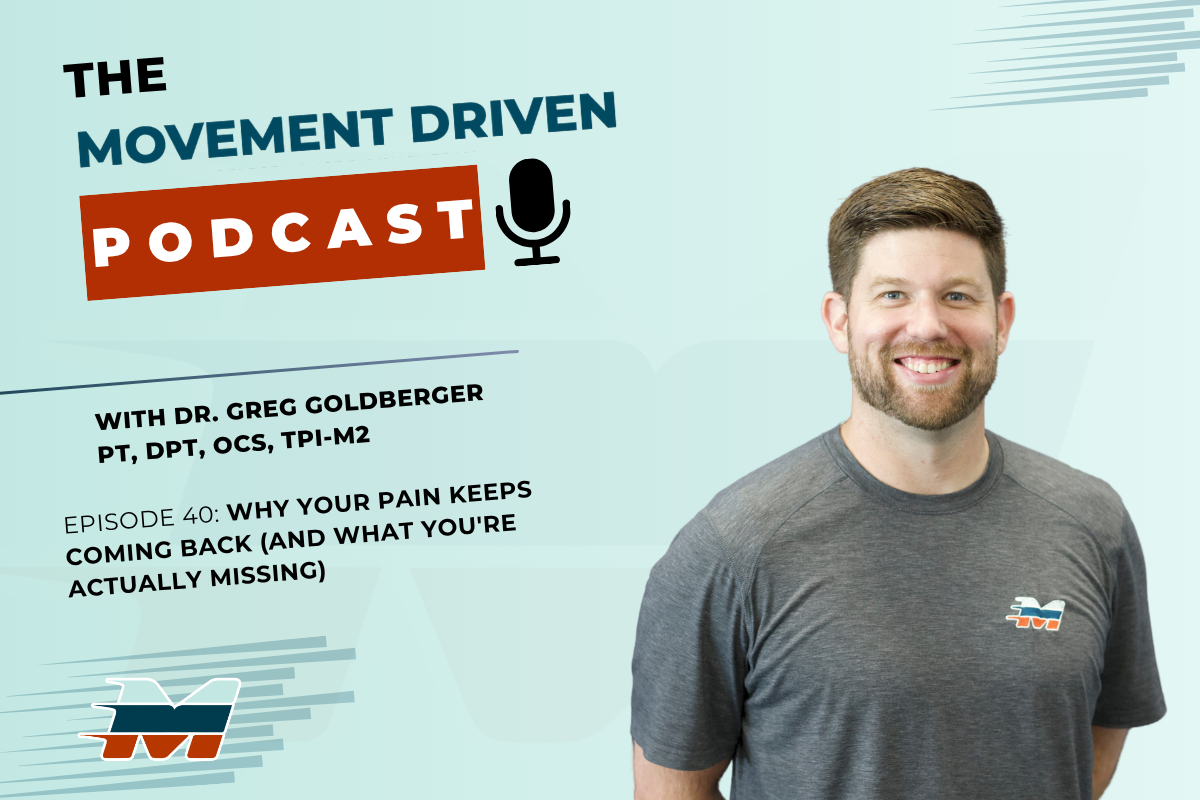
Why Your Pain Keeps Coming Back — And What Most Treatments Get Wrong
You've done the physical therapy. You've tried chiropractic. Maybe you've even gone the injection route. Things improve for a while — and then the same pain comes back in the same place, doing the same thing. Sound familiar?
In Episode 40 of the Movement Driven Podcast, Dr. Greg Goldberger unpacks exactly why this cycle happens, what most standard treatments miss, and what it actually takes to break out of it for good.
The Problem Isn't That You Haven't Tried — It's What Was Never Addressed
When patients come to Movement Driven after exhausting other options, the story is usually the same: they got some relief, but nothing stuck. Dr. Greg argues this isn't bad luck — it's a predictable outcome when the treatment never addressed how the patient was actually moving.
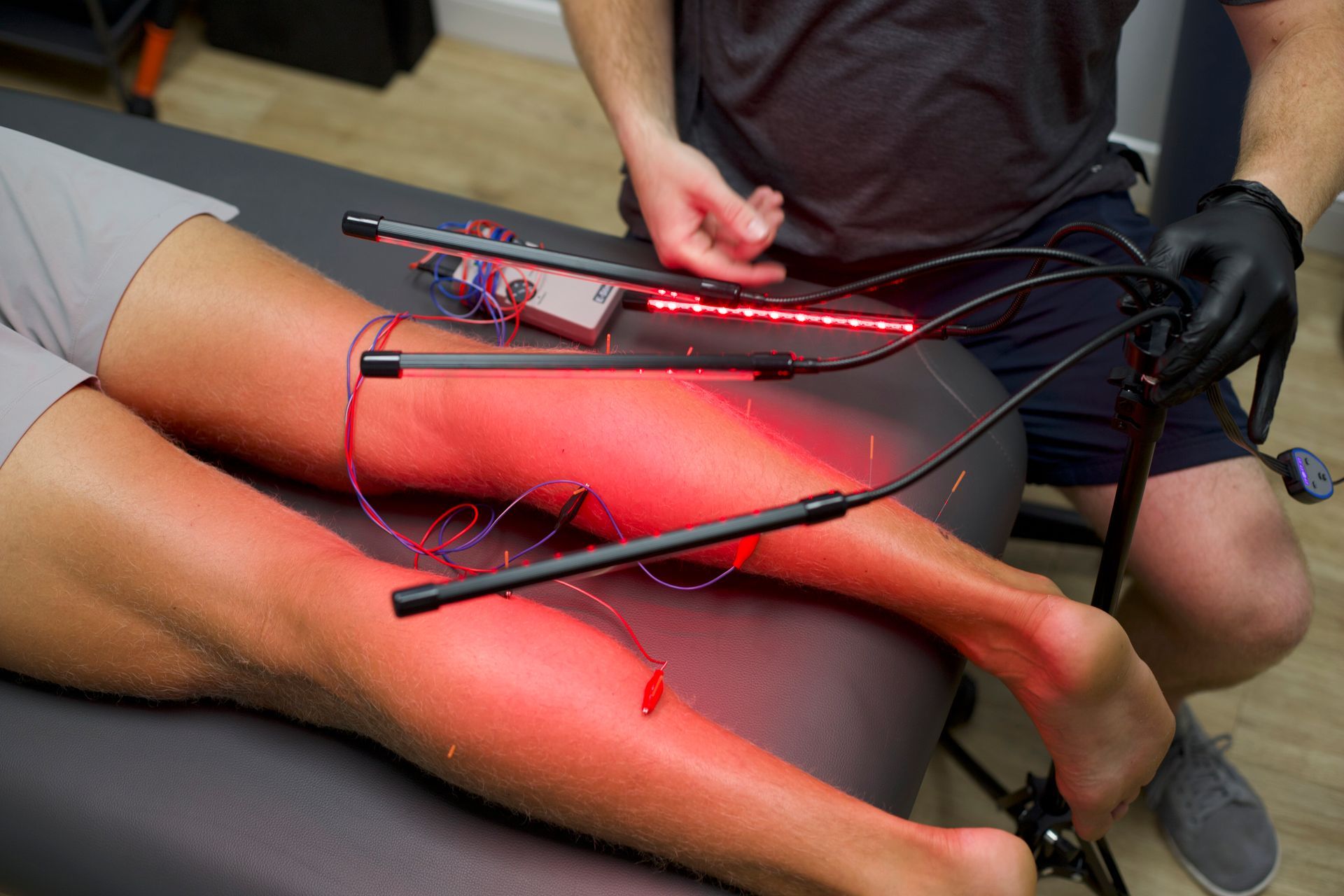
Passive modalities like massage, dry needling, laser, and shockwave all have their place. But in isolation, without a foundation of intentional, corrective movement at the center of care, they don't create lasting change. The name Movement Driven exists for a reason — movement has to be the core of any effective musculoskeletal rehab plan.
Symptom vs. Source: Understanding the Difference
One of the most important distinctions Dr. Greg makes in this episode is the difference between treating a symptom and treating the source. They can look nearly identical from the outside — which is part of why so many people feel like they're getting real treatment when they're not.
Take knee pain as a common example. The pain is local to the knee. The swelling, the discomfort, the stiffness — it all lives there. So naturally, treatment focuses there. And it can work, temporarily. Rest, ice, quad strengthening — the knee calms down. But if the actual driver of that injury is poor hip movement, the second you return to activity, the hip moves the same way it always has, loads the knee the same way it always has, and the cycle starts over.
Finding the root cause isn't advanced care — Dr. Greg considers it PT 101. The issue is that even when providers identify a contributing factor like a hip mobility deficit, they often stop there. Identifying the problem and actually changing it are two different things.
Why Movement Quality Matters As Much As Movement Quantity
This is where Dr. Greg's approach goes a layer deeper than most. It's not enough to give someone the right exercises if they perform them with the same compensations they've always had.
Picture a patient with low back pain who gets prescribed glute bridges. They know what glute bridges are — they've done them before. So they hop on the table and go through the motion. But if they're defaulting to their habitual pattern — loading the low back and hamstrings while the glutes barely engage — nothing has changed. The compensation is being reinforced, not corrected.
What Movement Driven focuses on is changing the way the brain and body communicate throughout that movement. It means slowing down, cueing attention to where force is being generated, and rebuilding the pattern from the ground up. That process takes time and real attention to detail — but it's the thing that produces change that actually holds.
What a Real Movement Assessment Actually Looks Like
A standard evaluation tends to check strength, check flexibility, and start a program. Dr. Greg's assessment goes further by looking at movement quality in three dimensions — not just what a patient can or can't do, but how they do it.
That means watching someone walk, squat, and balance. It means distinguishing between a passive mobility restriction, a control deficit through the range, and an end-range strength issue — because each of those requires a different approach. It means taking a detailed history and listening carefully to what makes someone better or worse, because that information alone accounts for the majority of the diagnostic picture.
The goal isn't just to identify a weakness or a deficit. It's to understand the full pattern of how someone moves and figure out where in that chain things are breaking down — then build a plan that actually rewires it.
The One Question You Should Be Asking Any Provider
If you're currently in treatment and not sure whether you're getting the right care, Dr. Greg offers a simple filter: ask your therapist why you're doing what you're doing. Ask them to explain the thought process behind your program.
A good clinician should be able to answer that clearly. The specific approach might differ from provider to provider — that's normal and expected in a field that involves a lot of clinical judgment. But if your therapist can't articulate why they're having you do something, that's a problem. You deserve a plan with a purpose behind it, not exercises picked because they're standard for your diagnosis.
Breaking the Cycle
If you've recognized yourself in any of this — if you've been through the rounds and keep ending up back at square one — it's worth seeing whether the source has ever actually been addressed.
The path forward isn't more of the same. It's a different kind of evaluation, a different kind of plan, and a willingness to commit to changing the way you move — not just managing what hurts.
Ready to find out what's actually keeping you in pain? Book a free 15-minute discovery call or schedule your first evaluation for $79. Dr. Greg sees patients at both Jacksonville and St. Johns locations — and is ready to dig into what everyone else missed.
🎧 Listen to the full episode on Spotify, Apple Podcasts, or YouTube.