Knee Pain Going Up and Down Stairs? Here's What Your Body Might Be Telling You
That ache on the staircase is rarely just a "knee problem", here's what's really going on
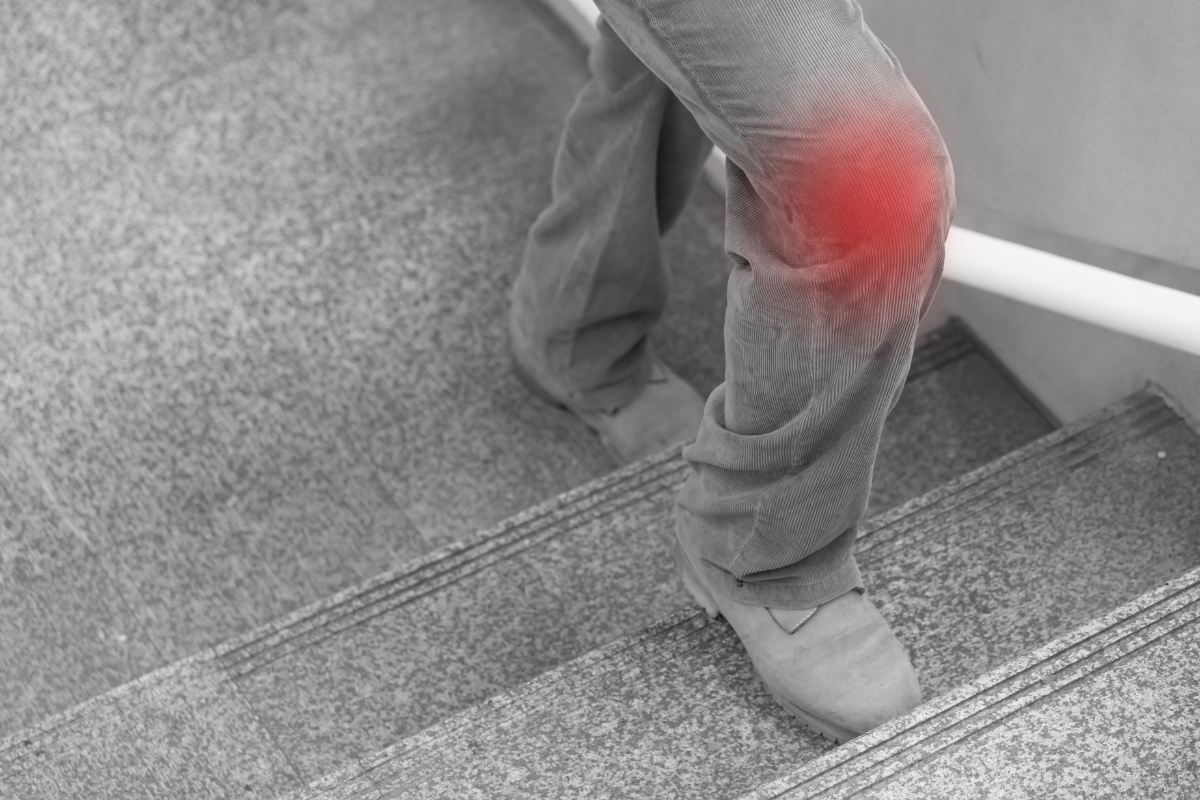
It's a familiar story: the stairs start to bother you. Going down feels worse than going up. There's a dull ache at the front of the knee, maybe after sitting through a movie or a long drive. For a lot of active adults and runners in Jacksonville and St. Johns, this is the first sign that something needs attention, and the good news is that it's usually very treatable.
Patellofemoral pain syndrome: the usual suspect
The most common reason for front-of-knee pain on stairs is patellofemoral pain syndrome (PFPS), often nicknamed "runner's knee." OrthoInfo, from the American Academy of Orthopaedic Surgeons, describes PFPS as pain in the front of the knee and around the kneecap that can make climbing stairs, kneeling, and other everyday activities difficult.
A telltale clue is the so-called "theater sign", pain that flares after sitting for a long time with the knee bent. As
Cleveland Clinic puts it, PFPS is essentially knee pain you feel under or around the kneecap, often during workouts or on the stairs, and it usually responds well to a couple of months of physical therapy.
Importantly, PFPS is typically
not a sign of structural damage. The clinical guidelines published in the
Journal of Orthopaedic & Sports Physical Therapy describe it as anterior knee pain aggravated by activities that load the knee under bend, squatting, prolonged sitting, stair climbing, jumping, or running.
Tendon issues
Sometimes the culprit is a tendon rather than the kneecap joint itself. The patellar and quadriceps tendons take significant load every time you climb, descend, jump, or squat. When that load outpaces what the tendon is prepared for, it can become irritated, producing pain just below or above the kneecap that's worse with stairs and loaded movement.
Mobility restrictions
Stiffness in the wrong places forces the knee to absorb more than its share. Limited ankle mobility, for example, can change how you load the knee on every step. Tightness through the hips and quads can pull on the kneecap's tracking. The knee ends up paying the price for a restriction somewhere up or down the chain.
Strength deficits
Weakness is one of the biggest drivers of stair-related knee pain, and one of the most fixable. When the muscles of the hip and thigh can't control the knee well, the joint loads unevenly. That's why rehab for knee pain so often includes hip and core work: research and clinical guidelines consistently point to strengthening the muscles around the hip and knee as a cornerstone of recovery.
Why knee pain often starts elsewhere
Here's the part most people miss. The knee is caught in the middle, between the hip above and the ankle below, so it frequently becomes the site of pain without being the source. Weak or poorly controlled hips, limited ankle motion, or faulty movement patterns can all show up as knee pain on the stairs.
This is exactly why treating the knee in isolation, just icing it, resting it, or doing a few kneecap exercises, so often falls short. A proper evaluation looks at the whole chain to find what's actually driving the symptoms.
What to do about it
The encouraging news, echoed by both Cleveland Clinic and OrthoInfo, is that most cases of patellofemoral pain respond well to conservative treatment: activity adjustments and a targeted exercise program, no surgery required in the vast majority of cases. A physical therapist can identify whether you're dealing with PFPS, a tendon issue, a mobility limitation, a strength deficit, or some combination, and build a plan that addresses the real cause.
Don't wait until it affects everyday life
Stair pain has a way of quietly expanding, from workouts, to daily walks, to simply getting around the house. Don't wait until the pain affects your daily activities. Book a Discovery Call with Movement Driven and let's get to the bottom of your knee pain, serving Jacksonville and St. Johns County.
This article is for general education and isn't a substitute for an individualized evaluation.