Returning to Golf After Injury: Why Pain-Free Doesn’t Mean Ready to Play
What golfers should know about rebuilding mobility, strength, power, and swing tolerance before returning to the course after an injury.
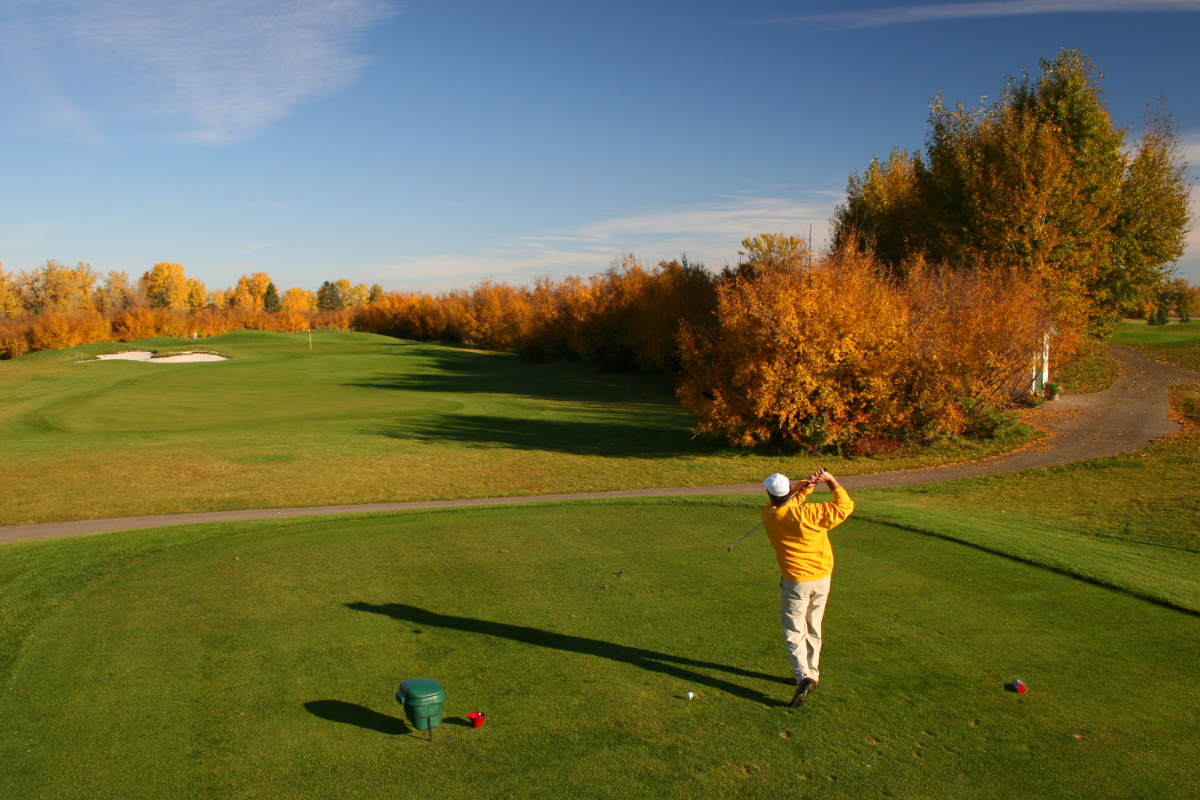
If you’re a golfer, getting sidelined by an injury can make it tempting to return to the course the second you start feeling better. Maybe your back no longer hurts during everyday activities. Maybe your shoulder finally feels good again. Saturday rolls around, your friends have a tee time, and 18 holes suddenly sounds like a great idea.
But there’s an important difference between feeling better and being ready to play.
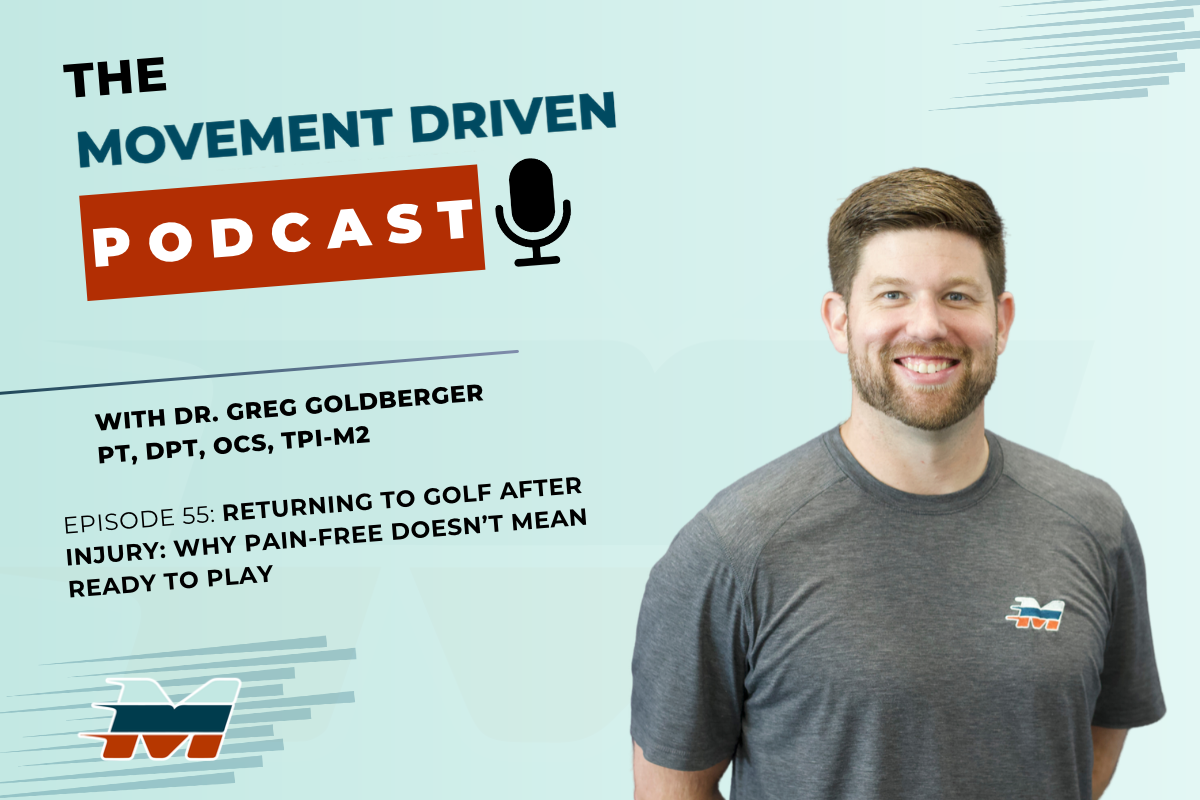
In this episode of the Movement Driven Podcast, Dr. Greg Goldberger, PT, DPT, OCS, TPI, discusses what returning to golf after an injury can actually look like and why gradually rebuilding your body’s tolerance is such an important part of the process.
Why Going From Rest to 18 Holes Can Be a Problem
One of the biggest mistakes Dr. Greg sees isn’t necessarily returning to golf — it’s returning to too much golf too quickly.
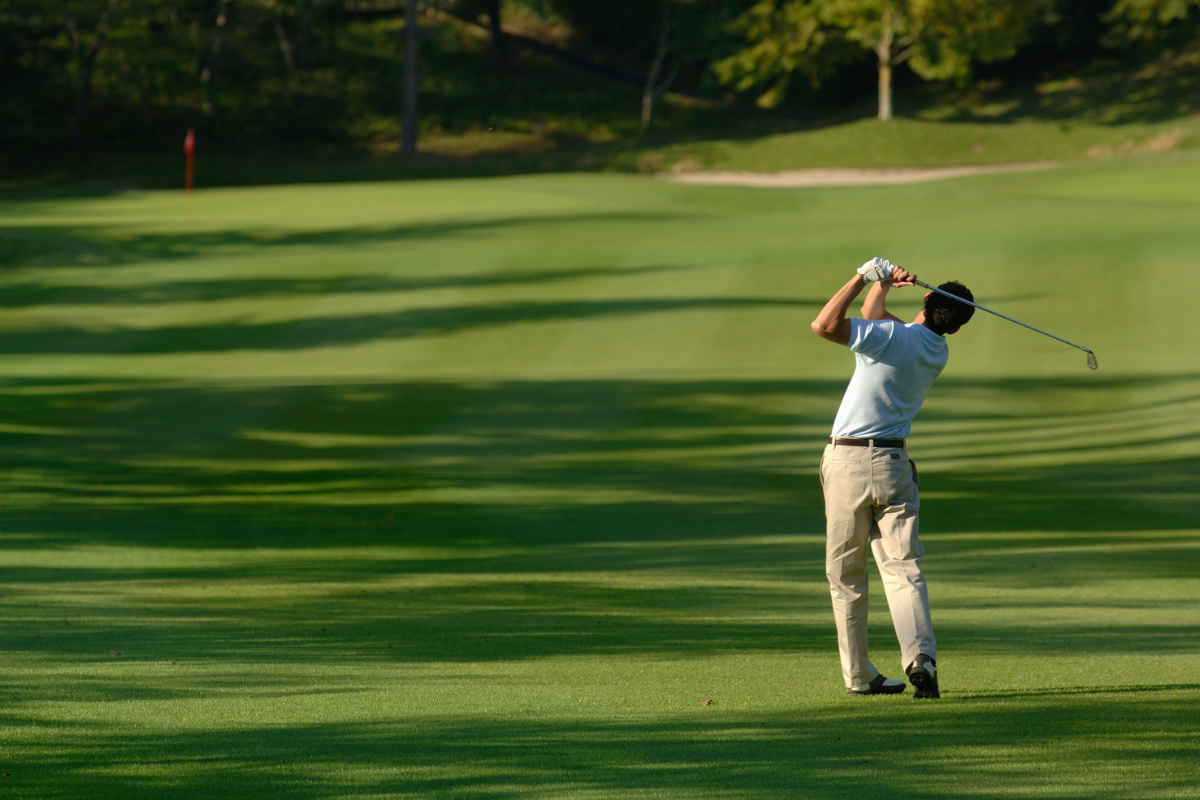
Think about what a full day on the course can demand from your body. You may hit balls during your warm-up before repeatedly swinging throughout an 18-hole round. Depending on your game, that could mean dozens upon dozens of swings involving rotation, force, speed, and repeated loading.
If your body hasn’t gradually rebuilt its tolerance for those demands, feeling good during normal daily activities may not be enough.
That’s why return-to-sport rehabilitation shouldn’t simply be about waiting until the pain disappears. The goal is to progressively prepare your body for what you’re actually asking it to do.
What Does Returning to Golf After an Injury Look Like?
There isn’t one universal timeline for getting back on the golf course. The injury, symptoms, physical limitations, goals, and demands of the individual golfer all matter.
Dr. Greg explains in the episode that he looks at several areas throughout the rehabilitation process, including:
- Pain and symptoms
- Mobility
- Muscle activation and motor control
- Strength
- Power
- Tolerance for golf-specific movement
- Ability to handle increasing swing volume
For a golfer recovering from a low-back injury, for example, the progression might begin well before hitting a driver.
Once everyday activities are no longer reproducing symptoms and the golfer has made appropriate progress, golf can be gradually reintroduced. That might mean starting with putting, progressing to a limited number of wedge shots, and then slowly increasing distance, club length, speed, and volume.
Rather than treating golf as an all-or-nothing activity, the return can be dosed and progressed much like an exercise program.
Mobility and Strength Are Only Part of the Picture
Dr. Greg also discusses how his TPI training helps him evaluate the connection between a golfer’s physical abilities and what is happening during the golf swing.
A restriction in mobility, difficulty controlling a particular movement, or weakness in an important area may affect how a golfer moves through the swing.
That doesn’t necessarily mean every golfer needs a completely different swing. Instead, understanding the body-swing connection can help identify physical limitations that may be contributing to discomfort or making certain positions more difficult to access.
At Movement Driven Performance Physiotherapy, the goal is to look beyond the painful area and determine what the body may need to move, tolerate load, and perform more effectively.
Recovery Isn’t Always a Straight Line
Another important takeaway from the episode: recovery isn’t always linear.
You can make significant progress and still experience occasional setbacks or fluctuations along the way. That doesn’t automatically mean rehabilitation isn’t working.
The important part is understanding when your body is ready for the next progression — and when increasing activity too aggressively could be more than it is prepared to handle.
As Dr. Greg explains, getting out of pain is only one part of that equation.
The later stages of rehabilitation can involve building strength, introducing power exercises, increasing sport-specific movements, and eventually preparing the body for the volume required for a full round.
For golfers in Jacksonville, St. Johns, and throughout Northeast Florida, where golf can be a year-round activity, having a plan for that transition can be especially important when you’re eager to get back on the course.
Listen to the Full Episode
If you’re recovering from an injury, repeatedly dealing with the same issue when you return to golf, or wondering whether your body is actually prepared to play again, this episode is for you.
Listen to “Returning to Golf After Injury: Why Pain-Free Doesn’t Mean Ready to Play” on the Movement Driven Podcast to hear Dr. Greg break down the return-to-golf process, what milestones he looks for during rehabilitation, how TPI can help identify physical limitations, and why getting back to the sport you love involves more than simply waiting for the pain to disappear.
If an injury or movement limitation is keeping you from playing the way you want, Movement Driven Performance Physiotherapy provides one-on-one physical therapy and golf-focused rehabilitation for active adults and athletes in Jacksonville and St. Johns, Florida.
Schedule an evaluation or book a free Discovery Call with Dr. Greg to discuss what’s keeping you from getting back to the course.