Strength Training, Nutrition & Recovery for Long-Term Health with Nikki Graham
Dr. Greg and Graham Strength & Conditioning co-owner Nikki Graham discuss sustainable habits, personalized training, and staying active through every stage of life.
You’re showing up for workouts. You’re putting in the effort. But your progress has stalled, and adding another training day doesn’t seem to help.
What else deserves your attention?
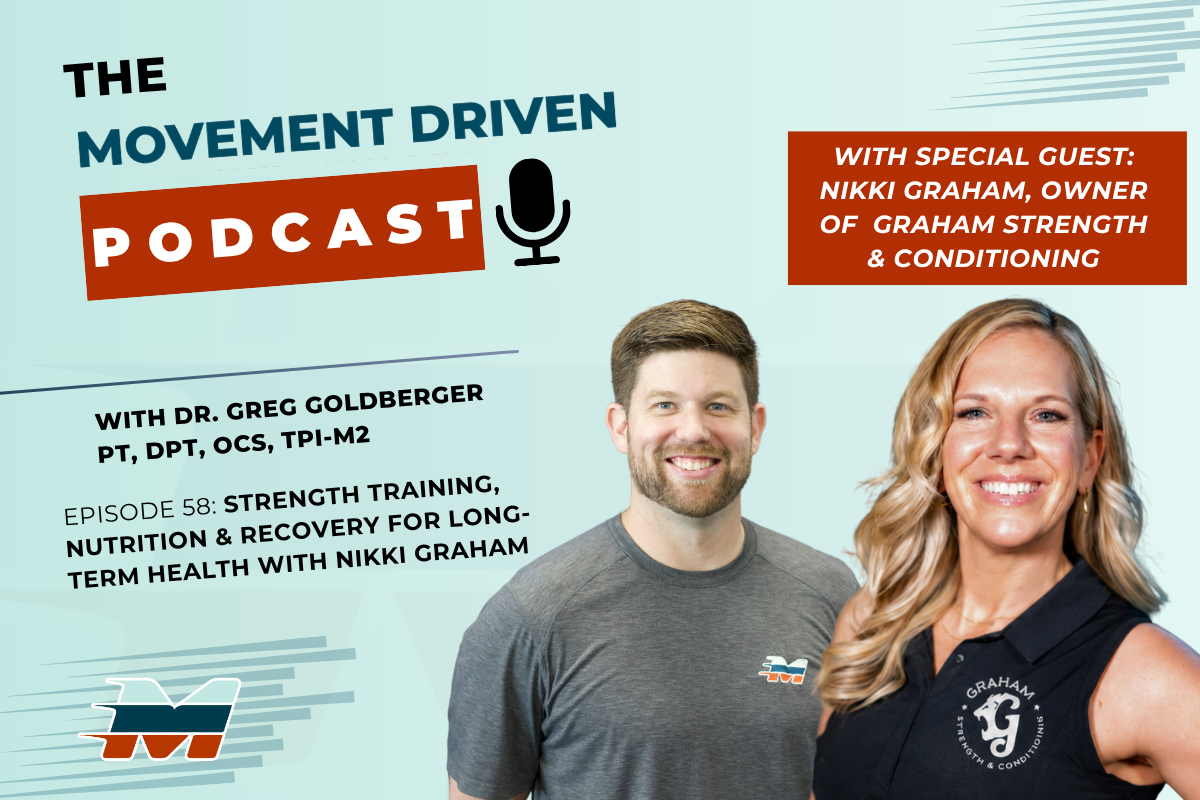
On this episode of the Movement Driven Podcast, Dr. Greg Goldberger welcomes Nikki Graham, co-owner of Graham Strength & Conditioning in Neptune Beach and Director of Coach Development with Healthy Steps Nutrition.
Their conversation explores how Nikki approaches fitness, nutrition, and recovery with adults who want to feel stronger today and keep enjoying an active life for years to come.
A Personal Reason to Focus on Prevention
Nikki’s interest in physical therapy began while watching her mother struggle with her health. Accompanying her to appointments showed Nikki how much compassionate, attentive care could matter.
She went on to become a physical therapist assistant, working primarily in nursing homes and home health. Those experiences, along with losing her mother at a young age, shaped her desire to help people take an earlier, more active role in their health.
That purpose eventually led Nikki and her husband, Tanner, to open Graham Strength & Conditioning. Together, they brought backgrounds in physical therapy and collegiate strength and conditioning into a gym built around helping people maintain an active lifestyle.
What Happens Between Workouts?
During the episode, Nikki points out that a gym session accounts for roughly one hour of someone’s day. Her coaching also considers the routines that fill the remaining hours.
When a member feels stuck, she wants to understand their nutrition, sleep, stress, and mindset alongside their training.
Dr. Greg and Nikki discuss why that broader conversation matters. A person may be committed to attending classes while still struggling to build routines that support their goals outside the gym.
Understanding those challenges gives the coaching team a more complete picture of the person they’re helping.
Giving New Habits Time to Stick
Nikki identifies expectations about timing as one of the biggest challenges she encounters in nutrition coaching.
People often arrive ready to work hard for a few weeks or months. Building habits they can continue through busy schedules, holidays, and changing circumstances takes a longer commitment.
Her approach centers on helping clients make changes they can practice consistently. Through her work with Healthy Steps Nutrition, she also mentors coaches who guide people through that process.
For Dr. Greg, the conversation comes back to a familiar challenge in rehabilitation, too. Progress requires participation and repeated effort, even when someone understandably wishes for an immediate solution.
Keeping Coaches and Physical Therapists Connected
One of the most practical parts of the episode explores how Graham’s coaches and Dr. Greg communicate when a member develops pain or has difficulty with a movement.
Nikki describes a team that pays attention. When a coach notices someone struggling, they share that information so she can follow up and determine whether additional support is appropriate.
Dr. Greg explains how that collaboration can translate into specific adjustments during rehabilitation. Depending on the individual, those conversations might involve reducing weight, changing an exercise, or temporarily limiting impact.
The shared goal is to create a plan the member and their coaches understand, with clear guidance on how training fits into the recovery process.
Training Options That Meet People Where They Are
Graham’s programming includes strength work, conditioning, and planned training cycles. Nikki explains that workouts also offer three levels of modifications.
Those options accommodate differences in experience, limitations, and personal goals. A member’s preferences matter, too. Someone may want to build strength without pursuing a one-repetition maximum or performing every movement offered in class.
Dr. Greg and Nikki discuss how that flexibility helps create an environment where members can participate at an appropriate level and communicate openly with their coaches.
Making Room for Recovery
Toward the end of the conversation, Nikki addresses the assumption that an open gym schedule should mean training every available day.
She describes recovery as a frequent sticking point for people who equate doing more with making more progress.
Dr. Greg adds that an easier day can still include intentional movement. They discuss making room for lower-intensity activities and considering how those days fit into the overall training plan.
Their conversation encourages listeners to give recovery the same attention they give their workouts.
Building an Active Life You Can Sustain
Throughout the episode, Dr. Greg and Nikki return to the everyday reasons people want to improve their health. They want to enjoy their hobbies, participate in family life, and feel confident in what their bodies can do.
Their working relationship shows how coaching and physical therapy can contribute to those goals through communication, individualized guidance, and an understanding of each person’s priorities.
📍 Looking for support with pain, an injury, or returning to your favorite activities?
Movement Driven Performance Physiotherapy offers individualized, one-on-one care for active adults and athletes in Jacksonville and St. Johns, Florida.
Explore care options or request a discovery call at movementdriven.com.
🎧 Hear the complete conversation on the Movement Driven Podcast, available on Spotify, Apple Podcasts, and YouTube.
Connect with Graham Strength & Conditioning