Tennis Elbow vs. Golfer’s Elbow: What’s Really Causing Your Pain?
Elbow pain isn’t just a problem for tennis players and golfers. Dr. Greg Goldberger explains what separates tennis elbow from golfer’s elbow, why the painful spot may not be the true source of the problem, and what your movement has to do with recovery.
If you’ve ever heard the terms “tennis elbow” or “golfer’s elbow,” you might assume the diagnosis tells you exactly what caused the problem.
But you don’t have to pick up a tennis racket or golf club to experience either condition.
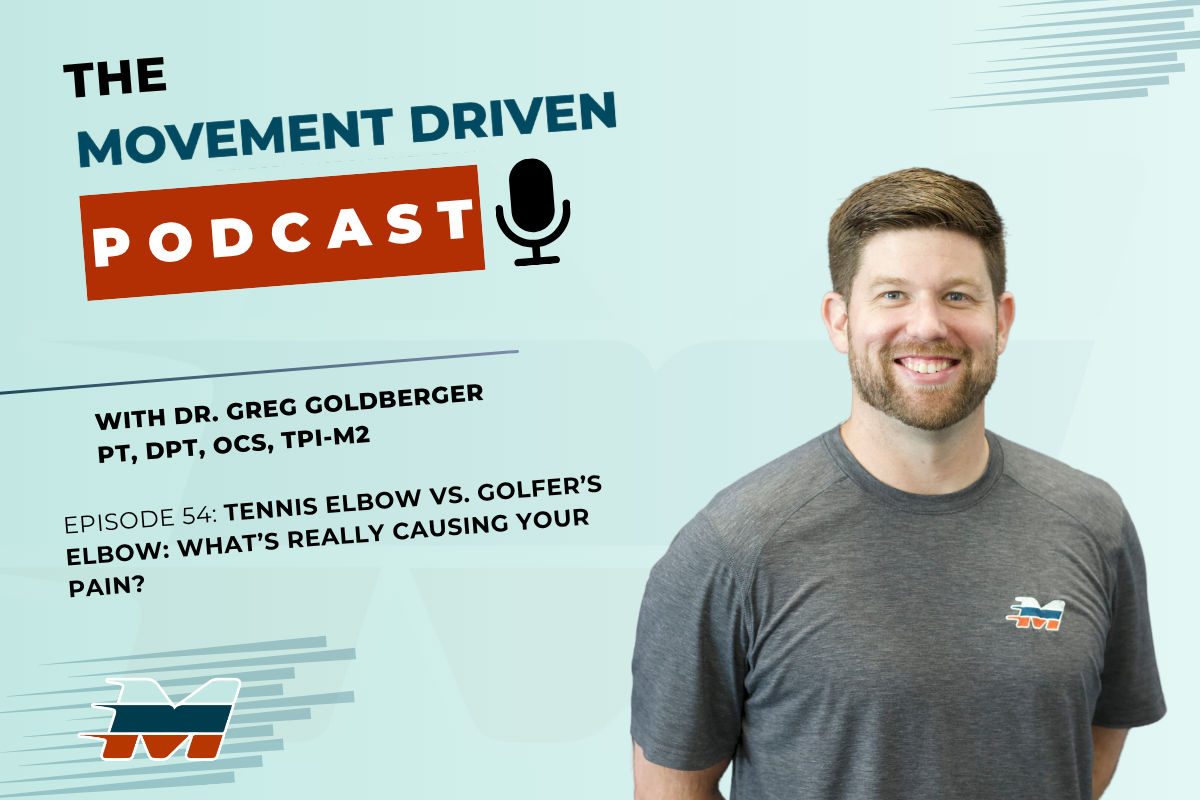
In this episode of the Movement Driven Podcast, Dr. Greg Goldberger breaks down what tennis elbow and golfer’s elbow actually are, how repetitive movements can contribute to them, and why successfully treating elbow pain often requires looking beyond the elbow itself.
Tennis Elbow vs. Golfer’s Elbow: What’s the Difference?
One of the simplest differences between tennis elbow and golfer’s elbow is where the pain occurs.
Tennis elbow typically causes pain along the outside of the elbow, where several of the muscles responsible for extending the wrist and fingers connect through the common extensor tendon.
Golfer’s elbow typically causes pain along the inside of the elbow, involving the muscles responsible for movements such as wrist and finger flexion and forearm rotation.
Their names come from movements commonly associated with their respective sports, but these conditions aren’t exclusive to athletes.
Repetitive gripping, lifting, pulling, pushing, typing, and other everyday movements can repeatedly load the muscles and tendons surrounding the elbow.
That means golfers can develop tennis elbow, tennis players can experience golfer’s elbow, and someone who plays neither sport can still develop either condition.
Why Gripping Can Play Such a Big Role
Think about how often you grip something throughout the day.
A dumbbell. A pull-up bar. A golf club. A tennis racket. Even something as simple as a jug from the refrigerator.
As Dr. Greg explains in the episode, your strongest grip occurs with your wrist positioned in slight extension. Because of the way the muscles and tendons of the forearm work together, strong and repetitive gripping can place demand on both sides of the elbow.
For athletes who lift weights, play golf, participate in CrossFit, or regularly perform other grip-heavy activities, that repeated stress can eventually become a problem.
But identifying the irritated tissue is only part of the evaluation.
Your Elbow May Not Be the Root of the Problem
At Movement Driven, the goal isn’t simply to find the spot that hurts.
It’s to determine why that area is being overloaded in the first place.
Dr. Greg explains that elbow pain is rarely something he evaluates completely in isolation. Limitations elsewhere in the body may change how force is transferred through the arm and ultimately place more demand on the elbow.
For example, he commonly looks at factors such as:
- Rotator cuff strength and activation
- Shoulder mechanics
- Thoracic spine mobility
- Shoulder blade movement
- Neck and upper-back mobility
- How the individual grips, lifts, trains, works, or plays their sport
If the shoulder or upper back isn’t moving or functioning as well as it should, the body still has to find a way to complete the movement.
Sometimes, the elbow and forearm end up taking on more work as a result.
That’s why repeatedly treating only the painful area may provide some relief without addressing what caused the irritation in the first place.
What About Golfer’s Elbow?
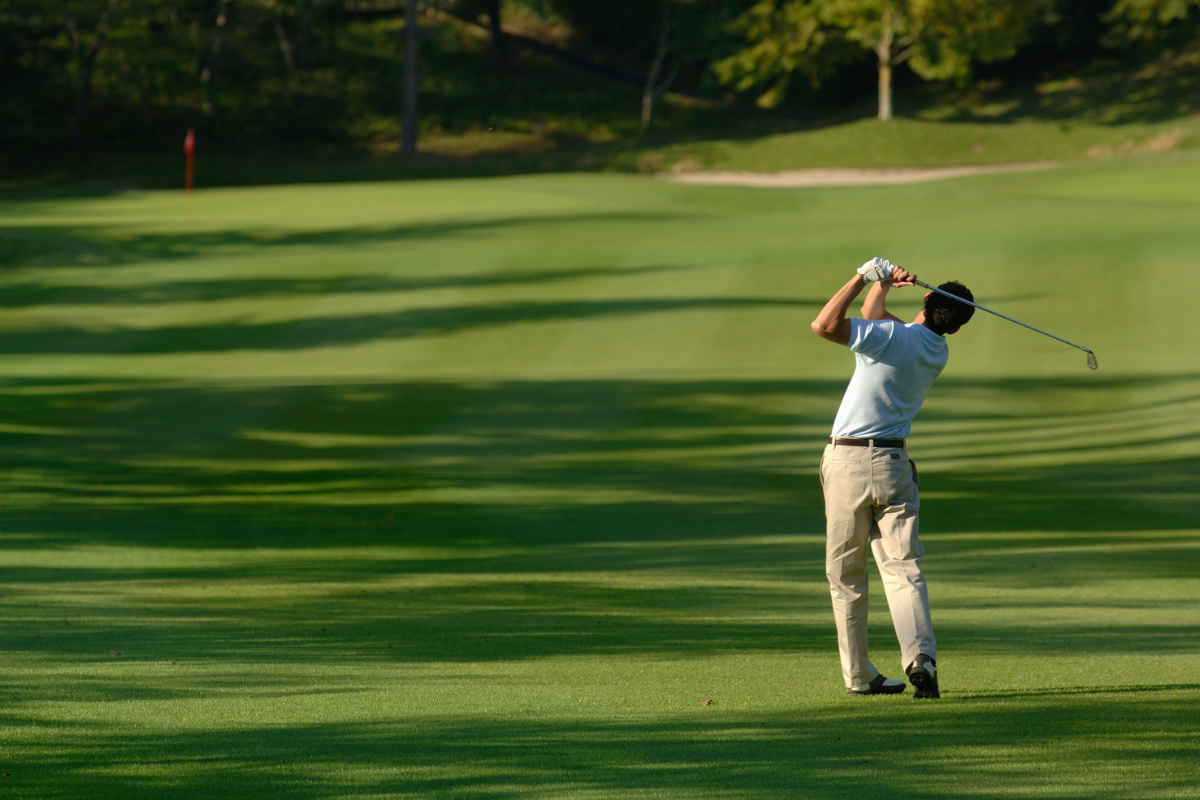
For golfers, the evaluation can extend even farther down the body.
Movement Driven offers TPI (Titleist Performance Institute) assessments, which use a 16-movement screen to evaluate physical characteristics that may influence a golfer’s swing.
Dr. Greg discusses one particularly interesting connection in the episode: limited internal rotation of the lead hip can contribute to problems farther up the chain, including trail-arm golfer’s elbow.
If a golfer can’t rotate effectively through the lead hip, the body has to compensate elsewhere during the swing. That may change how the golfer moves through impact, increase reliance on the arms and hands, and place additional stress on the elbow.
This is exactly why evaluating a golfer with elbow pain shouldn’t necessarily begin and end at the elbow.
The goal is to understand the golfer as a whole athlete.
Common Mistakes When Trying to Fix Elbow Pain
Elbow pain can be particularly frustrating because completely resting the muscles involved isn’t always realistic.
You still have to use your hands.
Typing, brushing your teeth, working, carrying things, training, and countless other daily activities require the muscles of the hand, wrist, and forearm.
One mistake Dr. Greg discusses is constantly testing, stretching, or aggravating the painful area to see whether it still hurts.
Instead, reducing the activities that significantly increase symptoms may be necessary while the area begins to recover. For a golfer, for example, that could mean temporarily backing away from big drives or long irons.
Some self-release work throughout the forearm may also be useful, but when pain continues for weeks, repeatedly trying different stretches or exercises without understanding the cause can keep you stuck.
Don’t Wait Six Months to Address Elbow Pain
One of Dr. Greg’s biggest recommendations from this episode is simple:
Don’t wait until a small problem becomes a chronic one.
An elbow issue that has been present for a few weeks may be much easier to address than one that has been irritated for six months.
A physical therapy evaluation can look beyond the painful tissue to determine what may be contributing to the problem, whether that involves the elbow itself, shoulder strength, upper-back mobility, sport mechanics, or another limitation along the movement chain.
For golfers, a TPI assessment can provide an additional look at the physical limitations that may be influencing the swing.
Listen to the Full Episode
Want to understand what may really be behind tennis elbow or golfer’s elbow?
Listen to “Tennis Elbow vs. Golfer’s Elbow: What’s Really Causing Your Pain?” on the Movement Driven Podcast as Dr. Greg Goldberger breaks down the differences, common causes, treatment mistakes, golf-specific considerations, and what you can do when elbow pain starts interfering with the activities you love.
If elbow pain is keeping you from golfing, lifting, training, working, or simply moving comfortably, Movement Driven can help you identify what’s contributing to the problem and create a plan designed around your goals.
Visit movementdriven.com to book a discovery call with Dr. Greg.
Mention the Movement Driven Podcast to receive your initial evaluation for $79.
🎧 Listen to the full episode of the Movement Driven Podcast on Spotify, Apple Podcasts, or YouTube.