Beyond the Workout: Nutrition, Recovery & Building Better Athletes with Tyler Martin
Why better health takes more than an hour in the gym — and how personalized coaching, physical therapy, and smarter training can help you thrive.
Most people start working with a personal trainer because they have a specific goal. Maybe it's losing weight, building muscle, improving athletic performance, or simply feeling better.
But what happens when reaching that goal requires looking beyond the workout itself?
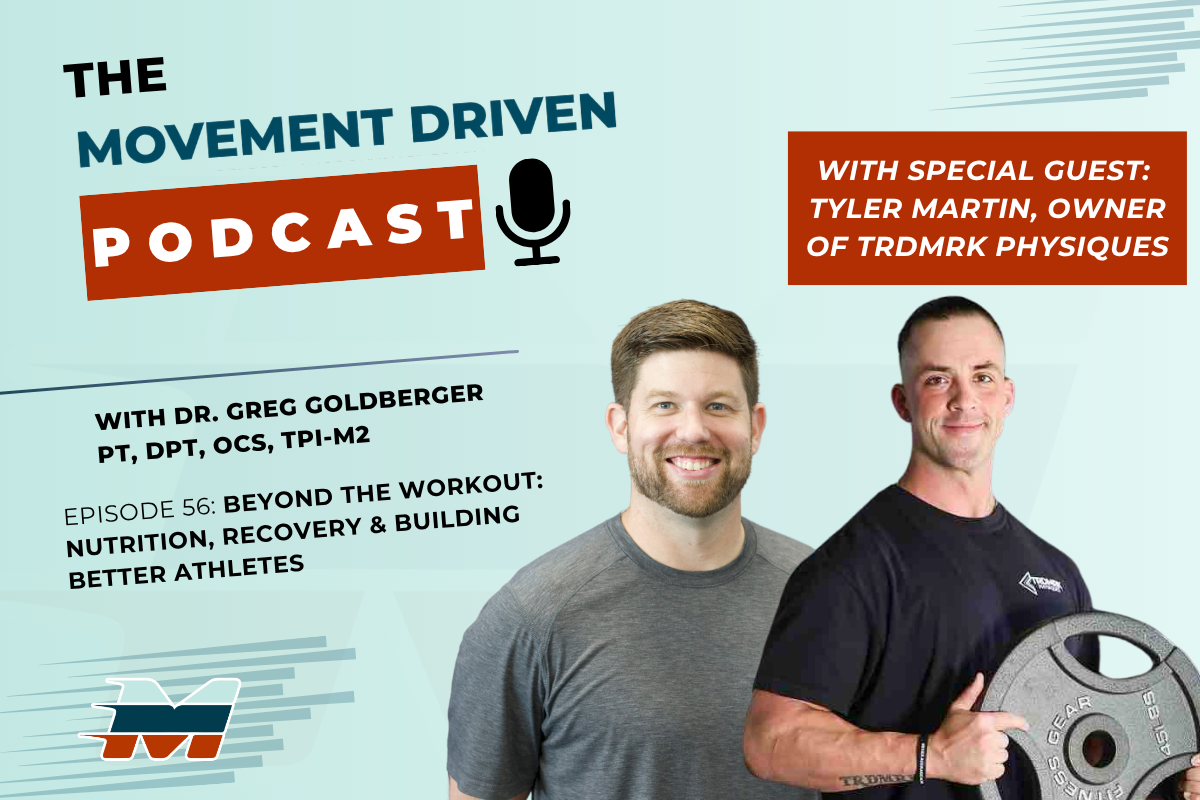
On this episode of the Movement Driven Podcast, Dr. Greg Goldberger sits down with Tyler Martin, certified personal trainer and founder of TRDMRK PYSIQUES, to discuss why long-term health and performance depend on much more than exercise alone.
From nutrition and recovery to individualized coaching and youth athletic development, the conversation explores what it really means to build a healthier, stronger, and more capable body.
From Weight Loss to Whole-Body Wellness
Tyler's approach to personal training started with his own experience.
After struggling with his weight and experimenting with popular diets, including keto and other structured nutrition programs, he realized that lasting results aren't always found in following the latest fitness trend.
What works for one person may not work for another.
That experience helped shape his coaching philosophy. Rather than focusing exclusively on weight loss or physical appearance, Tyler now considers the bigger picture, including energy levels, sleep quality, recovery, nutrition, and how clients feel throughout their daily lives.
Because improving your health shouldn't just change how you look. It should change how you live.
The Other 167 Hours of Your Week
One of the biggest takeaways from the conversation is that a workout represents only a small portion of someone's overall health.
If you're working with a personal trainer for one hour each week, what happens during the other 167?
Tyler explains that while workout programs and meal plans are more accessible than ever, having information isn't necessarily the same as having effective guidance.
Real coaching requires asking questions, understanding individual challenges, and adjusting strategies based on how someone responds.
Are you recovering between workouts? Are you sleeping well? Are your energy levels consistent? Are your daily habits actually supporting your goals?
These are the questions that help turn a fitness program into a sustainable lifestyle.
Are You Living a Good Life or an Excellent One?
During the episode, Tyler shares a question he frequently asks his clients: How would you describe your day-to-day life?
Most people respond with something along the lines of "good" or "fine."
But Tyler challenges them to consider whether that's truly where they want to be.
His philosophy isn't simply about helping someone reach a number on the scale or improve a specific lift. It's about identifying opportunities to improve how they feel, function, and perform in everyday life.
For some, that means having more energy for their families. For others, it means improving their strength, confidence, or ability to participate in activities they enjoy.
The goal is to move beyond simply getting through the day and start working toward a higher quality of life.
Bridging the Gap Between Physical Therapy and Personal Training
Another important part of the conversation focuses on the relationship between physical therapists and personal trainers.
At Movement Driven, Dr. Greg regularly works with active individuals who want to recover from injuries without giving up the activities they love.
But rehabilitation is only one part of the process.
Once someone has addressed their pain or movement limitations, continuing to develop strength, mobility, and overall fitness becomes an important part of maintaining progress.
That's where collaboration with qualified fitness professionals can make a difference.
Dr. Greg and Tyler discuss how their working relationship allows them to approach client needs from different perspectives while sharing the same goal: helping people move better and perform with confidence.
Physical therapy can address pain, injuries, and movement restrictions, while personal training provides opportunities to continue building strength, conditioning, and physical capacity.
Together, these approaches help bridge the gap between rehabilitation and long-term performance.
Building Better Athletes, Not Just Better Golfers
The conversation also highlights Dr. Greg and Tyler's work with junior golfers at St. Johns Golf & Country Club.
While golf instruction focuses on developing the skills needed to play the game, physical training provides the foundation that allows young athletes to perform those skills.
Tyler emphasizes developing qualities such as strength, power, coordination, stability, rotation, and conditioning.
His goal isn't necessarily to create a better golf swing. It's to create a better overall athlete.
Dr. Greg approaches the same objective through movement quality, mobility, and ensuring athletes have the physical capabilities needed to perform different movements effectively.
Both agree that young golfers benefit from developing well-rounded athletic abilities rather than focusing exclusively on golf-specific movements.
By improving overall athleticism, young players can develop more physical options that support their continued growth and performance on the course.
Why Movement Literacy Matters
Toward the end of the episode, Tyler introduces the concept of movement literacy.
Much like learning to read or write, developing movement literacy means building an understanding of how to control and use your body in different situations.
Can you squat, hinge, rotate, balance, and coordinate movements effectively?
And once you've developed those foundational skills, can you add resistance, speed, or complexity?
Dr. Greg expands on this idea by discussing the importance of movement variability and how being able to move in different ways can help distribute physical demands throughout the body.
Whether you're recovering from an injury, training for a sport, or simply trying to stay active as you age, developing a wider range of movement capabilities can support long-term physical performance.
The Takeaway
Better health isn't built through a single workout, a restrictive diet, or a one-size-fits-all training program.
It's developed through consistent habits, individualized guidance, and understanding how different aspects of your health work together.
Tyler's approach to coaching and Dr. Greg's philosophy at Movement Driven share an important perspective: The goal isn't just to get people out of pain or help them reach a fitness milestone. It's to give them the tools to keep moving forward.
Whether you're working toward a personal fitness goal, recovering from an injury, or helping a young athlete develop their abilities, having the right professionals supporting your progress can make a meaningful difference.
📍 Ready to move better and perform at your best?
Movement Driven Performance Physiotherapy provides personalized, one-on-one physical therapy, injury rehabilitation, and performance-focused care for active adults and athletes throughout Jacksonville and St. Johns, Florida.
Schedule your $79 initial evaluation or a free discovery call at movementdriven.com or call 904-257-5765.
🎧 Listen to the full episode on Spotify, Apple Podcasts, or YouTube.
Connect with Tyler Martin | TRDMRK PYSIQUES
Website: https://trdmrkphysiques.com/
Instagram: https://www.instagram.com/trdmrk_physiques
Facebook: https://www.facebook.com/profile.php?id=61565110624883