How to Prevent Football Injuries During Two-a-Days
Compressing a season's worth of conditioning into two weeks is exactly why football injuries spike every fall — here's what actually helps.
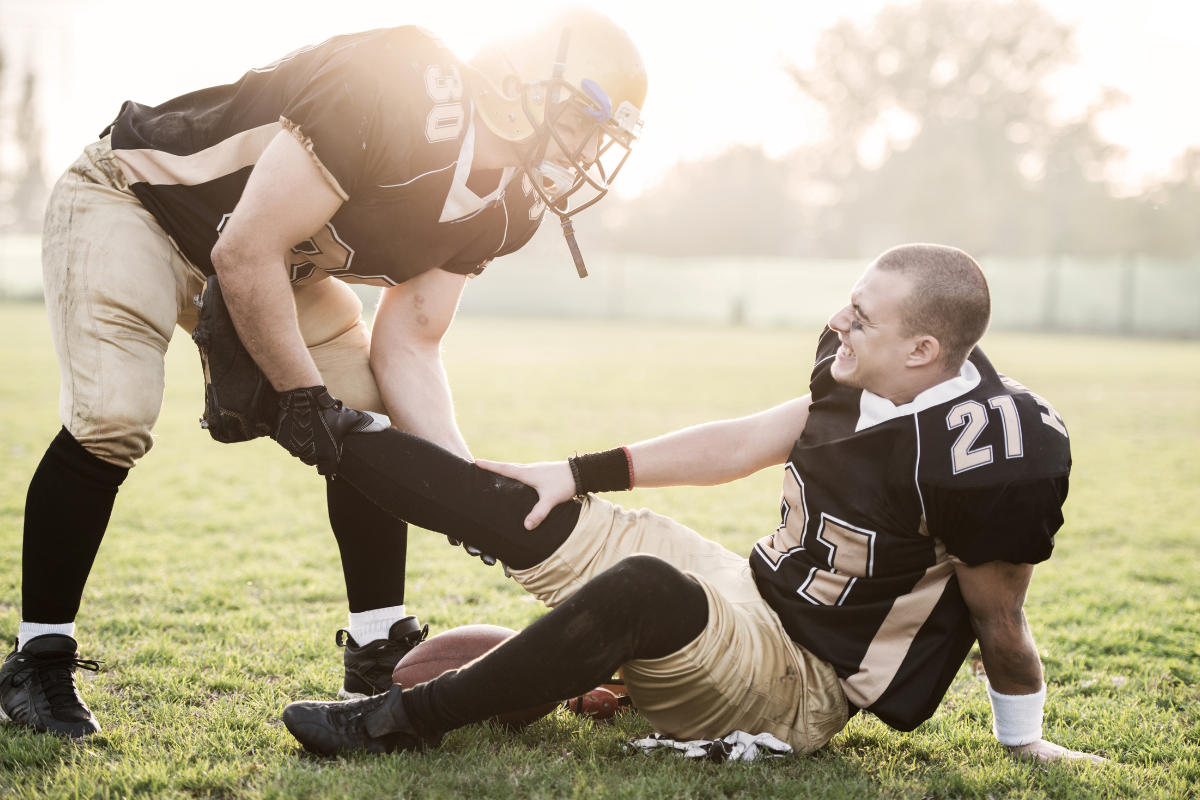
If you've spent any time around a Jacksonville-area football program, you already know the rhythm of two-a-days: two practices a day, full pads within the first week or two, and a jump in intensity that can catch even well-conditioned athletes off guard. It's also, predictably, when local physical therapy and sports medicine clinics start seeing a wave of new football-related injuries — from ankle sprains and hamstring strains to overuse injuries that build up over the course of a week rather than happening in a single hit.
Why Two-a-Days Are Such a High-Risk Window
The core issue isn't football itself — it's the pace at which training load increases. Most athletes come into two-a-days after a summer of lower-intensity activity, and then within days are asked to handle two full practices, contact drills, and conditioning work back to back. Conditioning is the foundation of injury prevention, and young athletes ideally begin training four to six weeks before their sport starts so their bodies have time to adapt gradually — but in practice, many athletes are still catching up on fitness during two-a-days rather than arriving prepared for them.
While no sport is completely injury-free, many youth football injuries can be reduced with proper preparation, appropriate equipment, a real warm-up, and early evaluation when something does start to hurt. That last point matters as much as the first two — a lot of two-a-day injuries don't come from one bad play, they come from an athlete playing through something for several days before finally saying something.
Common Mistakes We See
- Skipping the ramp-up period. Athletes who show up to two-a-days without any pre-season conditioning are asking their bodies to do in one week what should happen over four to six.
- Treating soreness and injury as the same thing. Normal muscle fatigue is expected during two-a-days. Sharp pain, swelling, or pain that doesn't improve with rest is a different category — and often gets ignored until it's a bigger problem.
- Not accounting for recovery. Rest days matter as much as training days — during rest, muscles repair and grow, and young athletes need at least one full rest day per week along with adequate sleep. Two-a-days often compress this, which is exactly why overuse injuries cluster in this window.
- Ill-fitting or worn-out equipment. Helmets, shoulder pads, mouthguards, and cleats need to fit correctly every season — equipment that's too large, too small, or worn out doesn't provide the protection athletes need.
Red Flags Parents and Athletes Shouldn't Ignore
Sudden fatigue beyond what's expected, getting sick more often, or complaining of aches and pains that don't resolve are all signs an athlete is overdoing it. The old mindset of pushing through pain doesn't hold up well against what we now know about overuse injury — some muscle soreness after hard training is normal, but sharp pain or pain that lingers needs attention, not another rep.
What Actually Helps
For athletes heading into two-a-days, the most useful thing isn't a single stretch or exercise — it's an honest read on where their body actually is before the intensity ramps up. A pre-season movement screen can flag asymmetries, strength deficits, or mobility restrictions that don't show up until an athlete is under real load, which is exactly the kind of thing that turns into a strain or sprain once two-a-days start.
For parents managing multiple practices, games, and (often) a second sport or training program on top of school football, it's easy for total weekly load to add up without anyone realizing it. A quick conversation about what the week actually looks like — practices, conditioning, any outside training — can catch an overload problem before it becomes an injury.
Not sure if your athlete is actually ready for the demands of two-a-days?
Schedule a Movement Screen with Movement Driven before the season ramps up further — it's a lot easier to catch a limitation now than to rehab an injury in October.