Beyond the Scoreboard: Maggie Mahany & The Movement Driven Podcast
Why the strongest athletes aren't the ones who never doubt themselves — they're the ones who've learned what to do with the doubt.
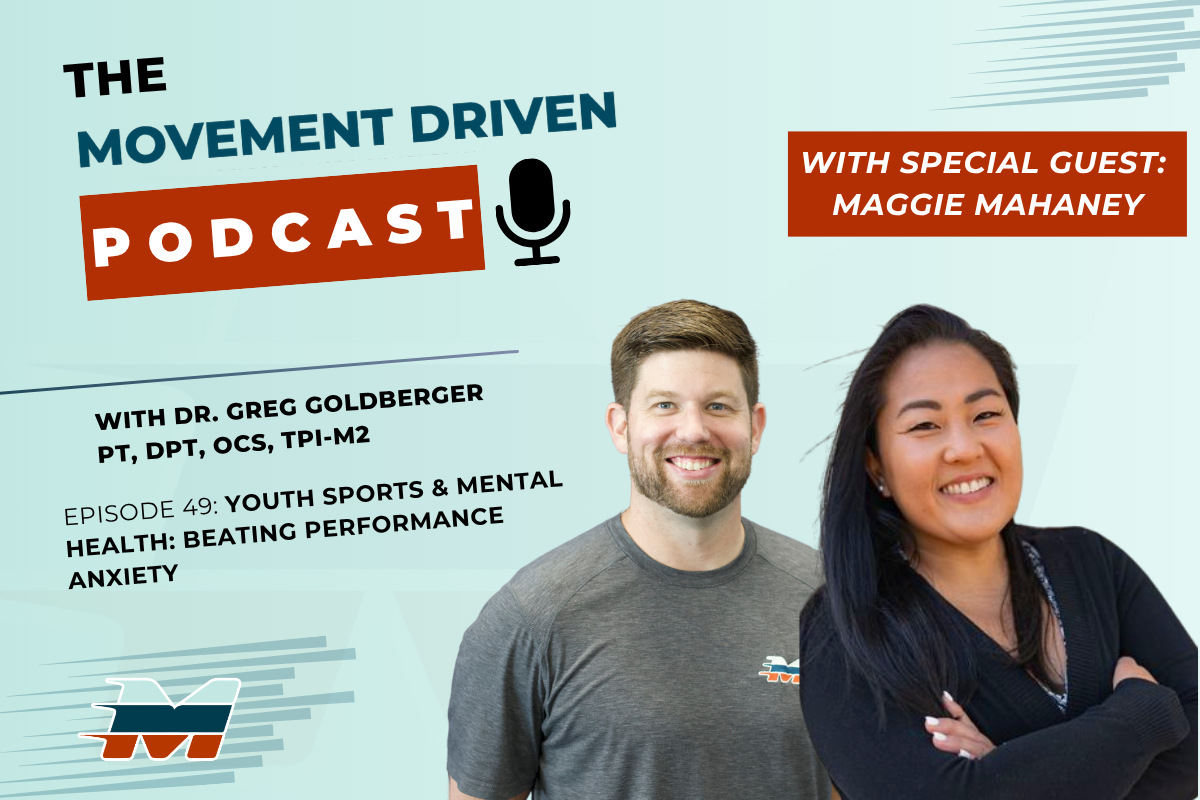
There's a version of every young athlete who has all the physical tools and still falls apart in the moment that matters. Not because they didn't practice enough. Not because their swing or their stroke or their footwork was wrong. Because nobody ever taught them what to do with the noise in their own head.
Maggie Mahany spends her career in that exact gap.
Meet the Counselor Coaching More Than the Mind
Maggie is a licensed mental health counselor with nearly five years in practice, a qualified clinical supervisor, and an L2 CrossFit coach at
CrossFit Tailwinds. Her caseload runs wide — she works with clients from adolescence through late adulthood on everything from anxiety and depression to relationships and trauma — but her specialty, and the focus of her conversation with Dr. Greg, is sports psychology for adolescent and professional athletes.
It's a niche that's grown fast, and for good reason. Kids are entering competitive sports younger, specializing sooner, and facing pressures that didn't used to show up until much later in an athletic career.
Why So Many Young Athletes Are Struggling Sooner
Maggie's read on the trend: today's youth athletes have strong relationships with their families and their coaches, but they haven't had time to build a strong relationship with themselves. They're playing travel ball, training year-round, and competing at higher levels earlier — often before they've had the chance to figure out what they actually enjoy versus what they've simply been signed up for.
Add in a well-meaning parent who bonds with their kid over a shared sport, and a subtle, unspoken pressure builds. Not "you have to be good at this." More like:
Dad lights up when I play well, so I'll keep playing even if I'm not sure I love it. Maggie's take is refreshingly non-judgmental — she doesn't frame this as bad parenting, just an easy trap that most families fall into without meaning to.
The Work Starts With Belief, Not Skill
When an athlete comes to Maggie struggling with performance under pressure, the conversation doesn't start on the field. It starts with core beliefs — the deep-seated ideas driving how an athlete interprets failure.
If I strike out, I'm a bad player. If I miss a workout, I'll never make the team. Until those beliefs get addressed, no amount of technical coaching sticks.
From there, the work becomes concrete. Maggie has clients write down three positives from every practice or competition — not to paper over what went wrong, but because most people are already excellent at finding the negative. Writing by hand, not typing into a phone, matters here too; there's a documented link between handwriting and how deeply something gets absorbed and believed. Over time, those repeated, written affirmations become short mental cues athletes can call on mid-competition — the same kind of self-talk elite CrossFit Games athletes use when you can literally lip-read them coaching themselves through a lift.
A Season on the Front Lines of the CrossFit Games
Maggie's connection to elite sport goes beyond the therapy room. She's now in her second year serving as a contracted mental performance coach for the CrossFit Games — a role that came directly out of tragedy. In 2024, an athlete competing in Fort Worth suffered a fatal medical event, and Maggie found herself doing impromptu crisis counseling for athletes, coaches, and staff who were there. The organization brought her on permanently afterward.
This year's Games came with its own reminder of why that role matters: a heart attack left onlookers shaken, and Maggie and her colleague were there to support them before medical staff arrived. It's a side of elite sport most fans never see — the quiet, ongoing work of caring for the people behind the competition.
Walk and Talks, Ruck and Talks — and a Different Way In
One of the most memorable parts of the conversation covered Maggie's "walk and talk" and "ruck and talk" sessions — literally walking or rucking alongside a client instead of sitting across from them in an office.
The reasoning is simple and, in Maggie's experience, especially effective for men: sitting face-to-face and maintaining eye contact while discussing something vulnerable can feel like a wall. Walking side by side removes that pressure entirely. Clients open up faster, answer harder questions more honestly, and — in the case of the ruck sessions — get something almost symbolic out of it. Taking off a weighted vest at the end of a session becomes a physical echo of setting down whatever they walked in carrying.
The Takeaway
None of this is about turning young athletes into robots who never feel doubt or pressure. It's about giving them — and the adults raising them — real tools: naming the belief underneath the performance, building routines that reinforce progress instead of rumination, and finding the format (a couch, a walk, a rucking trail) that actually gets someone talking.
If you're raising a competitive kid, coaching one, or you're an athlete who's ever gotten in your own way before a big moment, this episode is worth the listen.
📍
Is your athlete's body keeping up with the demands of their sport? Movement Driven works with athletes of all ages across Jacksonville and St. Johns County to build strength, resolve pain, and keep them performing at their best. Schedule your $79 first evaluation or a free 15-minute discovery call at
movementdriven.com or call
904-257-5765.
🎧 Listen to the full episode on
Spotify,
Apple Podcasts, or
YouTube.