Does an MRI Really Explain Your Back Pain?
A disc bulge on your MRI might look alarming — but research shows it's far more common (and far less predictive) than most people realize.
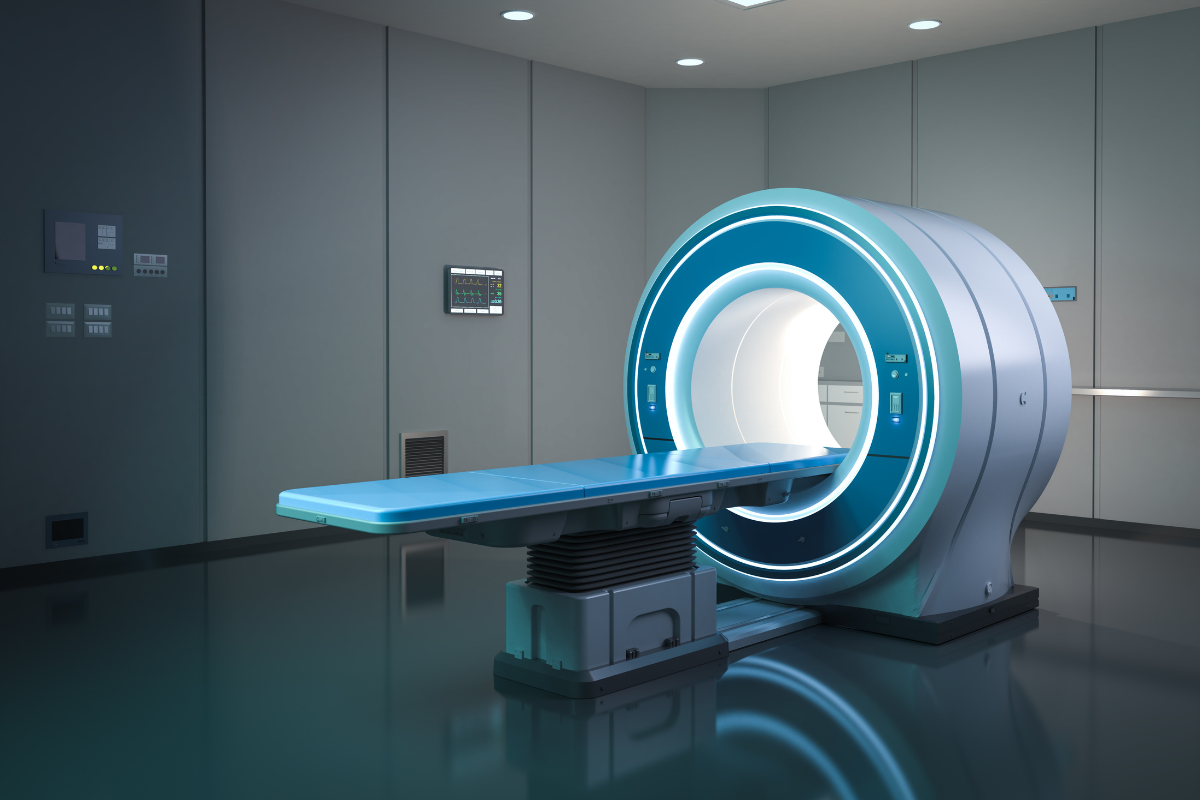
Few moments in healthcare create more anxiety than opening an MRI report and seeing words like "disc bulge," "degeneration," or "annular tear." It's natural to assume that whatever the scan found must be the reason you're in pain — and it's easy to walk away from that appointment feeling like your back is fragile, damaged, or somehow broken.
Here's what we want every patient in Jacksonville to know before that fear takes hold: an MRI is a powerful tool, but it is not a pain detector. And the research on this is more reassuring than most people expect.
The Problem: Imaging Findings Don't Always Match Symptoms
MRIs are excellent at showing structure — the shape, position, and condition of discs, joints, and soft tissue. What they're not good at is telling us whether that structure is actually the source of someone's pain.
This creates a common and frustrating disconnect: two people can have nearly identical MRI findings, and one is in significant pain while the other has none at all. Meanwhile, someone in real pain can have an MRI that comes back relatively unremarkable. If imaging findings automatically equaled pain, neither of these scenarios would be possible — yet both happen all the time.
Common Misconceptions
"A disc bulge means something is seriously wrong." Disc bulges are extremely common findings on MRI, including in people with no back pain at all. Their presence alone doesn't tell us they're the cause of current symptoms.
"If my MRI shows degeneration, my back will only get worse." Degenerative changes on imaging are a normal part of the aging process, similar to gray hair or wrinkles, and are frequently found in pain-free adults of the same age.
"I need surgery because of what the MRI shows." Structural findings alone are rarely the deciding factor for surgery. Function, response to conservative care, and specific neurological signs matter far more than the image itself.
"My back is fragile now that I know what's on the scan." This is one of the more harmful misconceptions, because believing your spine is fragile can actually change how you move — often in ways that increase pain and reduce confidence, independent of what's structurally happening.
The Evidence-Based Explanation
Research consistently shows that structural "abnormalities" on spinal imaging are common in people who have never experienced back pain. Widely cited systematic review data compiled by researchers and summarized by outlets like the National Institutes of Health has found disc bulges, degeneration, and even disc protrusions present in a substantial percentage of pain-free adults, with prevalence increasing with age — meaning many of these findings may simply reflect normal aging rather than a pain source. You can explore general findings on imaging and low back pain through NIH's health information resources.
The American Academy of Orthopaedic Surgeons echoes this, noting that imaging is generally reserved for cases involving red flag symptoms (such as significant neurological changes, unexplained weight loss, or trauma) rather than routine low back pain, precisely because early imaging doesn't consistently improve outcomes and can sometimes lead to unnecessary anxiety or intervention —
see OrthoInfo's low back pain resource.
This doesn't mean imaging is never useful — it absolutely is in the right circumstances. It means imaging is one piece of a larger picture, not a standalone verdict on why you hurt or what you're capable of.
What You Can Do
- Ask what your imaging findings mean in context, not just what they show. A finding without clinical correlation isn't automatically the explanation for your pain.
- Focus on function, not just the picture. What movements are limited? What activities are affected? These questions often matter more for treatment planning than the image itself.
- Avoid catastrophizing language. Reframe "my back is out" or "bone on bone" thinking — these phrases tend to increase fear and guarding, which can prolong recovery.
- Get a movement-based evaluation, not just an image-based one. A skilled clinical exam looks at how your spine moves, what reproduces symptoms, and what makes them better — information imaging alone can't provide.
- Stay active within a tolerable range. Movement is generally part of the solution for most non-specific low back pain, not something to avoid entirely.
When to Seek Professional Help
Most low back pain, even with concerning-sounding imaging findings, responds well to conservative care. That said, certain signs warrant prompt evaluation:
Numbness, tingling, or weakness that's progressively worsening- Loss of bladder or bowel control (a medical emergency — seek immediate care)
- Pain following significant trauma
- Unexplained weight loss alongside back pain
- Pain that doesn't improve, or worsens, over several weeks despite conservative care
How Movement Driven Can Help
At Movement Driven, we treat the person in front of us, not just the report in their chart. Our evaluations go beyond the MRI to understand how your spine actually moves, what specifically reproduces your symptoms, and what your body is currently capable of — so your treatment plan is built around your function, not just your imaging language.
If you've been handed an MRI report full of confusing terminology and left wondering what it actually means for your daily life, that's exactly the kind of conversation we specialize in.
Conclusion
An MRI can be a valuable piece of information, but it isn't the whole story — and it's rarely the deciding factor in how well someone recovers from back pain. Structural findings like disc bulges and degeneration are common in pain-free people too, which means your path forward should be guided by how you move and function, not just by what a scan shows.
Confused by your MRI results?
Schedule your $79 Initial Evaluation and let's understand what's actually driving your pain — not just what the report says.
FAQ Section
If my MRI shows a bulging disc, does that mean I have a bulging disc problem? Not necessarily. Disc bulges are commonly found in people without any back pain, so the presence of a bulge doesn't automatically confirm it's the cause of your symptoms.
Should I avoid exercise if my MRI shows degeneration? Generally, no. Degenerative changes are a normal part of aging, and appropriate movement is typically part of recovery rather than something to avoid.
Why would my doctor not order an MRI for my back pain? For most non-specific low back pain without red flag symptoms, imaging often doesn't change the treatment approach and can sometimes increase anxiety without added benefit — which is why many clinicians reserve it for specific situations.
Can physical therapy help even if I already have an MRI showing structural changes? Yes. Physical therapy focuses on improving movement, strength, and function regardless of what imaging shows, and many patients see meaningful improvement without those structural findings changing at all.
When is an MRI actually necessary for back pain? Typically when there are red flag symptoms — significant or progressive neurological changes, trauma, suspected infection, or unexplained weight loss — or when conservative treatment hasn't improved symptoms after a reasonable trial period.